- Teacher: Magali Roy-Fequiere
Category: Gender and Women's Studies
American political life is in a state of dysfunction and decay. Governing institutions seem unable to meet the demands of the modern world, and our common life is marked by fragmentation and hyperpolarization. The polity is sick, even dying, a diagnosis indicated by any number of opinion polls measuring widespread and growing distrust in governing institutions and among fellow citizens. A central part of the problem is that citizens and politicians have lost the ability to talk intelligently about the fundamental features of American political life. This course addresses this political and educational pathology by introducing students to difficult problems of constitutional interpretation. Students are invited to adopt the perspective of one responsible for designing or maintaining a polity. To do this, we will attempt to consider and inhabit multiple constitutional or regime-level perspectives, namely the perspective of a founder or constitutional framer, the perspective of a foreigner or outside observer, and the perspectives and concomitant critiques of those ostensibly included within the political community while being simultaneously denied the guarantees and privileges of full citizenship. Each of these vantage points offers insights that complicate, nuance, and deepen our understanding of the fundamental identity of the American regime. From these multiple vantage points we will consider such questions as: How democratic is the American Constitution? Is democracy only an aspiration, or is democracy also something that happens to us? Must a democratic constitution be capitalistic too? Does capitalism have limits or pose any threat to constitutional governance? How does the Constitution secure rights? What kind of person or citizen is created by our polity? Who is included and who is excluded from the political community? Does the constitutional order provide an adequate moral framework for political life? What is a constitution?
Through a close reading of core texts of the American political tradition, we will attempt to answer these and other similar questions. Our main texts will be primary sources that we will close-read together. We will also read several essays that synthesize and interpret these sources.
In this course, students will
This is a brief survey of differential and integral calculus from an applied perspective, including some material from multivariate calculus. Mathematical modeling with functions, derivatives, optimization, integration, elementary differential equations, and partial derivatives.
The prerequisites are an appropriate math placement level or MATH 131.

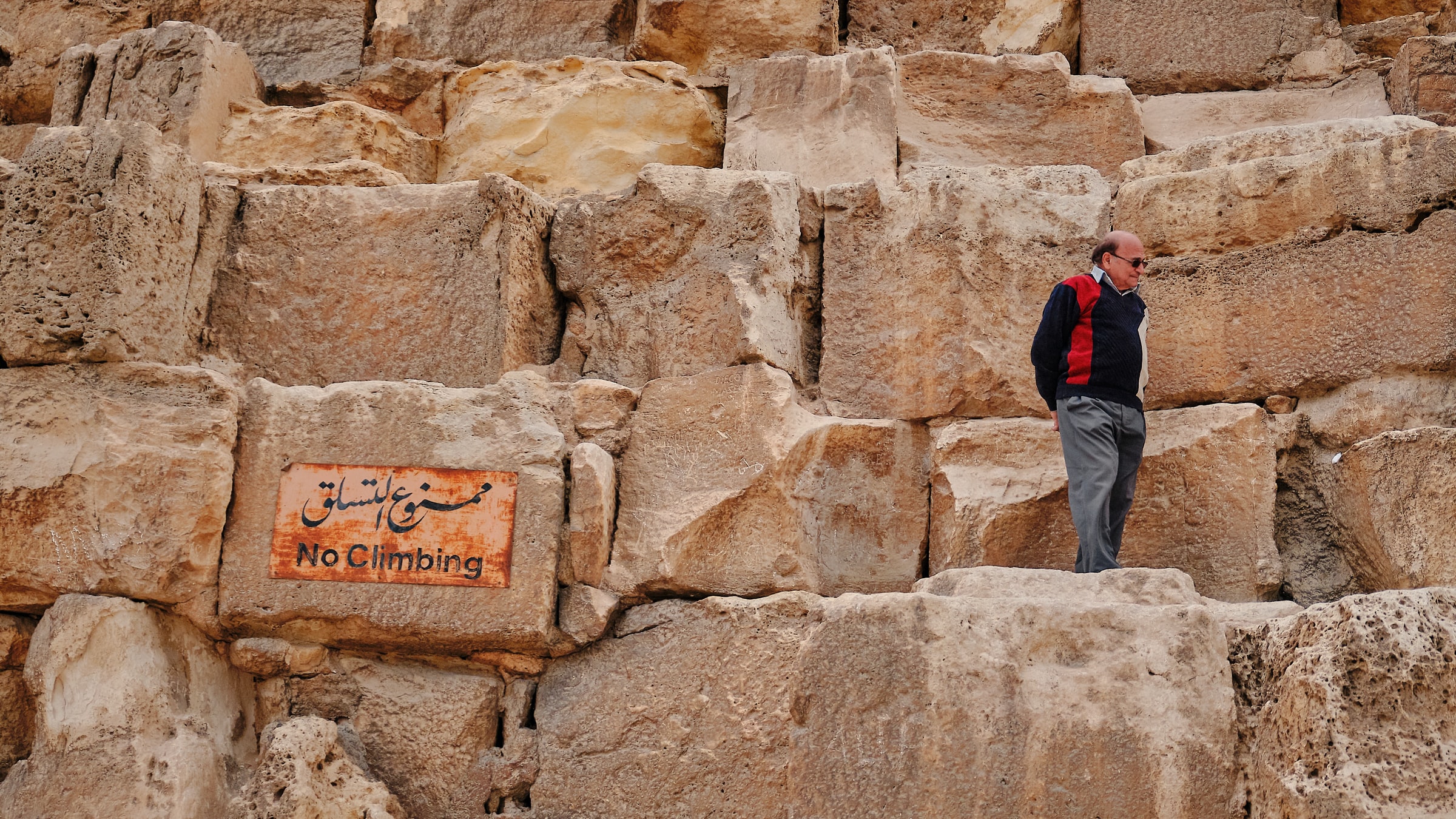
Archaeology’s Dirty Secrets. Often misunderstood, archaeology has played an important role in popular culture and in advancing scholarly understanding what makes us human. Archaeologists have championed causes just and unjust, and archaeology has been used to tell the stories of the oppressed as well as to erase the histories of whole peoples. From Nazi theories of race to the theft of Native skeletons to the African contribution to building New York city, this course takes on the challenges posed by the history of archaeology and invites you to ask questions such as, “Who owns the past? Who gets to tell the story? What does it mean to be human? How can archaeology or scholarship generally create a more just world?”
Photo by José Ignacio Pompé on Unsplash