- Teacher: James Thrall
Category: History
kkogut testing
An exploration of the physical geographies of space and place (ancient and modern, rural and urban) in children’s literature as signifiers of “childhood”; i.e., of the textually constructed child figure and of textually constructed childhoods as a whole. While the application of Jane Suzanne Carroll’s “topoanalysis,” is relatively narrow, focusing on the historical, cultural, and mythic landscape features repeatedly represented throughout British literature in general and the British fantasy series, The Dark is Rising in particular, the aim of the course is to extend this application outward to more diverse landscapes (real and imaginary) represented in a variety of texts written for children and young adults.
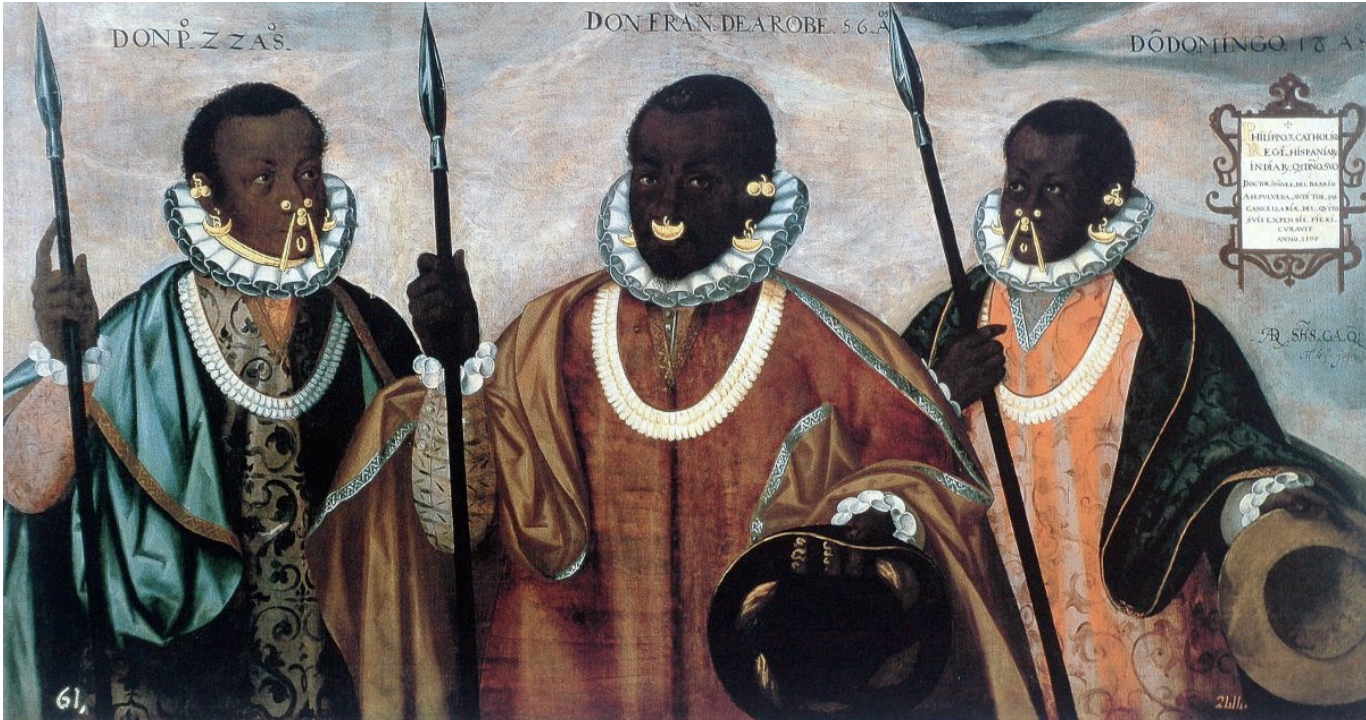
This course provides an introduction to the art, visual culture, and architecture of colonial, modern, and contemporary Latin America. The first half of the course will examine early contact between Europeans and Indigenous Americans, with an overview of the importation, adaptation, and responses of European artistic models in the Americas. We will analyze the transformation of Indigenous artistic traditions as a result of the European colonial project in the Americas (1492-ca–1820) through a variety of materials and topics, including, religious architecture, painting, prints, sculpture, and manuscripts drawings. The second half of the course will examine art from the early nineteenth century to the present, considering the role of the arts in building independent nations and creating shared artistic legacies constantly adapting and/or responding to outside influences. By analyzing current art historical debates, in the field of Latin American art, between national vs. cosmopolitan aesthetics, Hemispheric and Inter-American projects for continental unity we will see how Latin American artists negotiated issues of identity and contributed to the development of modern and contemporary art. We will explore twentieth-century Latin American visual arts through photography, manifestos, magazines, performances, exhibitions, and ephemera with a special focus on new technologies and global changes.
STAT 225: Linear Models and Statistical Software
This course develops further the ideas and techniques that were introduced in STAT 200 relative to regression modeling and experimental design, understood as instances of a matrix linear model. In addition, the student becomes familiar with at least one leading statistical package for performing the intensive calculations necessary to analyze data. Topics include linear, non-linear, and multiple regression, model-building with both quantitative and qualitative variables, model-checking, logistic regression, experimental design principles, ANOVA for one-, two-, and multiple factor experiments, and multiple comparisons.
Prerequisites: STAT 200, MATH 145 or 151, and MATH 185.
Cross-listed as MATH 225

STAT 225: Linear Models and Statistical Software
This course develops further the ideas and techniques that were introduced in STAT 200 relative to regression modeling and experimental design, understood as instances of a matrix linear model. In addition, the student becomes familiar with at least one leading statistical package for performing the intensive calculations necessary to analyze data. Topics include linear, non-linear, and multiple regression, model-building with both quantitative and qualitative variables, model-checking, logistic regression, experimental design principles, ANOVA for one-, two-, and multiple factor experiments, and multiple comparisons.
Prerequisites: STAT 200, MATH 145 or 151, and MATH 185.
Cross-listed as MATH 225