- Teacher: Jeffrey Gomer
Search results: 714
- Teacher: Gertrude Hewapathirana
- Teacher: Steve Cohn
- Teacher: Mary Armon
Course Catalog Description
MATH 121: Mathematical Ideas
This course offers an introduction to the history and concepts of elementary mathematics. Topics may include properties of number systems, geometry, analytic geometry, mathematical modeling, and probability and statistics.
Prerequisites: None

- Teacher: Ole Forsberg
Course Catalog Description
An advanced study of probability theory. Sample spaces, random variables and their distributions, conditional probability and independence, and the transformations of random variables.
The prerequisites are MATH 205 (Calculus III) and MATH 210 (Linear Algebra).

- Teacher: Ole Forsberg
Course Catalog Description
MATH 322: Mathematical Statistics II
A rigorous study of the theory of statistics with attention to its applications. Point and interval estimation, hypothesis testing, regression and correlation, goodness-of-fit testing, and analysis of variance.
Prerequisite: MATH 321

- Teacher: Ole Forsberg
Course Catalog Description
MATH 322: Mathematical Statistics II
A rigorous study of the theory of statistics with attention to its applications. Point and interval estimation, hypothesis testing, regression and correlation, goodness-of-fit testing, and analysis of variance.
Prerequisite: MATH 321

- Teacher: Ole Forsberg
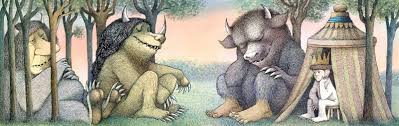
A critical and comprehensive study of Sendak's key works for children, including the groundbreaking picture book trilogy: Where the Wild Things Are, In the Night Kitchen, and Outside Over There; the aesthetic influences (from Mozart to Blake to Laurel and Hardy) that inform Sendak's narrative art; and Sendak as a cultural force whose modern mythology helped redefine our notions of childhood and whose pop cultural reach has extended from Broadway to Spike Jonze films to wild thing hoodies. Of special consideration is the figure of the child in Sendak's work, its origins as well as its monstrous and angelic incarnations.
- Teacher: Barbara Tannert-Smith
- Teacher: James Dyer
- Teacher: Hilary Lehmann
It is common to think of human perception as essentially causal in nature, to think of perception as something that happens when the world impinges on us, causing us to react to it. This view mistakes perception as passively reactive to the causal powers of the world around us and misunderstands the role perception can play in our practical reasoning. An instance of perception can function as a reason for action and not merely play a causal role in a chain of events; for example, if I see that you are upset and comfort you, my perception of your sadness functions as a reason for comforting you. In this course, we will examine perception’s capacity to function as a reason for acting and not merely as a one more link in a causal chain. The course is structured around the wager that the key to understanding perception’s capacity to be a reason for acting is the role that memory plays in shaping our capacities for perception. We will trace competing accounts of relations between memory and perception from the history of philosophy, paying particular attention to modern and contemporary accounts of memory and perception, and focusing especially on the work on Henri Bergson. The course opens and closes with careful attention to Bergson’s Matter and Memory; this attention is attenuated and sustained by examining accounts of memory from Elizabeth Anscombe, Friedrich Nietzsche, Sigmund Freud, Maurice Merleau-Ponty, Walter Benjamin, and Stanley Cavell. We will also watch movies by Orson Welles, Chris Marker, and others.

- Teacher: Daniel Wack