- Teacher: Gregory Gilbert
Category: Art - Art History
War and Conflict is fundamental to any study of IR. This course provides a detailed framework for understanding the different aspects of war and conflict. After introducing the conceptualization, assumptions and types of war and conflict, it proceeds to examine their causes, dynamics and consequences. Drawing on examples of war and conflict from Asia – Kashmir, disputes over the South China Sea and Taiwan, Sri Lankan civil war, conflict over Temple Mount/Noble Sanctuary and Ayodhya/Babri Mosque, and terrorism in Afghanistan – this course prepares the students to analyze these cases based on the various approaches on war and conflict. As advanced students of IR, they will also evaluate the relevance of IR theoretical paradigms (Realism, Liberalism and Constructivism) to these cases.
American political life is in a state of dysfunction and decay. Governing institutions seem unable to meet the demands of the modern world, and our common life is marked by fragmentation and hyperpolarization. The polity is sick, even dying, a diagnosis indicated by any number of opinion polls measuring widespread and growing distrust in governing institutions and among fellow citizens. A central part of the problem is that citizens and politicians have lost the ability to talk intelligently about the fundamental features of American political life. This course addresses this political and educational pathology by introducing students to difficult problems of constitutional interpretation. Students are invited to adopt the perspective of one responsible for designing or maintaining a polity. To do this, we will attempt to consider and inhabit multiple constitutional or regime-level perspectives, namely the perspective of a founder or constitutional framer, the perspective of a foreigner or outside observer, and the perspectives and concomitant critiques of those ostensibly included within the political community while being simultaneously denied the guarantees and privileges of full citizenship. Each of these vantage points offers insights that complicate, nuance, and deepen our understanding of the fundamental identity of the American regime. From these multiple vantage points we will consider such questions as: How democratic is the American Constitution? Is democracy only an aspiration, or is democracy also something that happens to us? Must a democratic constitution be capitalistic too? Does capitalism have limits or pose any threat to constitutional governance? How does the Constitution secure rights? What kind of person or citizen is created by our polity? Who is included and who is excluded from the political community? Does the constitutional order provide an adequate moral framework for political life? What is a constitution?
Through a close reading of core texts of the American political tradition, we will attempt to answer these and other similar questions. Our main texts will be primary sources that we will close-read together. We will also read several essays that synthesize and interpret these sources.
In this course, students will
This is a brief survey of differential and integral calculus from an applied perspective, including some material from multivariate calculus. Mathematical modeling with functions, derivatives, optimization, integration, elementary differential equations, and partial derivatives.
The prerequisites are an appropriate math placement level or MATH 131.

Archaeology’s Dirty Secrets. Often misunderstood, archaeology has played an important role in popular culture and in advancing scholarly understanding what makes us human. Archaeologists have championed causes just and unjust, and archaeology has been used to tell the stories of the oppressed as well as to erase the histories of whole peoples. From Nazi theories of race to the theft of Native skeletons to the African contribution to building New York city, this course takes on the challenges posed by the history of archaeology and invites you to ask questions such as, “Who owns the past? Who gets to tell the story? What does it mean to be human? How can archaeology or scholarship generally create a more just world?”
Photo by José Ignacio Pompé on Unsplash
This course examines the neural basis for cognition beginning with attention and spans the breadth of cognitive processes to include memory, learning, language, reasoning, and problem solving. Students learn how our minds absorb, store, and manipulate information from the world to solve problems, make decisions, comprehend language, produce art, and laugh at jokes. Students are encouraged to think critically and develop questions about their own cognitive processes.
First-Year Preceptorial is your gateway to a liberal arts education. This course will ask questions of you, find you exploring possibilities, considering responses, seeking alternative solutions. This course will also ask you to consider how more than one ‘answer’ might be possible, how complexity is one of the traits that defines humanity, our being human—far more than right and wrong, a or b, true or false. By engaging in close-reading, by participating in a classroom community of respect and consideration, and by allowing voices of those both like and unlike us to be heard, together we’ll work together to explore often difficult (but interesting) questions.
The specific focus of this course is ‘Creating Monsters.’ What is a “monster”? How does a “monster” come to be? What can a “monster” tell us about the society in which it exists? Through a variety of literary texts and films, we will analyze the “monster” as a socially constructed concept reflecting the anxieties, fears, and assumptions of a society. In this light, the monster is often not an entity that threatens us from the beyond, but something conceptualized and created within our own minds. We will therefore consider how the rhetoric of monstrosity can be applied to humans, especially marginalized groups, and ask what purpose inflicting “monstrous” language upon others has. We will draw a little from anthropology, sociology, philosophy, and cognitive and social psychology in evaluating and examining the factors involved in the creation and interpretation of monsters. Ultimately, we will consider in detail whether the study of monsters is in fact a study of ourselves and what it means to be human.

.
STAT 312: Data Mining and Statistical Programming
A rigorous exploration of statistical methods designed to glean information from a data set. Techniques include categorical analysis, clustering, trees and forests, dimensionality reduction, and outlier detection. Further topics include graphical and statistical methods for exploring data, as well as evaluating statistical methods. The Python programming language will be used.
Prerequisites: STAT 200 (plus another STAT course), CS 142, MATH 145 or 152, and MATH 185.
Cross-listed as CS 312

In this course, we will examine relations between the concepts of life and death by surveying a variety of ancient and modern philosophical accounts of them. We begin the course by exploring ancient philosophical practices designed to cultivate ways of thinking about death. We will be especially interested in how these specific practices of thinking about death helped determine various philosophical ways of life, distinct cultivated forms of thinking and acting. In doing so, we follow Pierre Hadot’s account of ancient philosophical practices in What Is Ancient Philosophy? and look at selected texts by Plato, Epicurus, Lucretius, Epictetus, Marcus Aurelius, among others. In the second half of the course, reading texts by Michel Foucault, Philippa Foot, Georg Simmel, and Michael Thompson, we investigate contemporary philosophical problems surrounding the concept of life. Here we will take a number of approaches: we will mark out certain historical questions about the cultivation of forms of life; we will discuss euthanasia; we will compare life to adventure. Finally, we will look at the treatment of forms of life, relations between ways of speaking and ways of doing, in particular the role of picturing in our understanding of speaking and doing, and death in Ludwig Wittgenstein’s Philosophical Investigations.
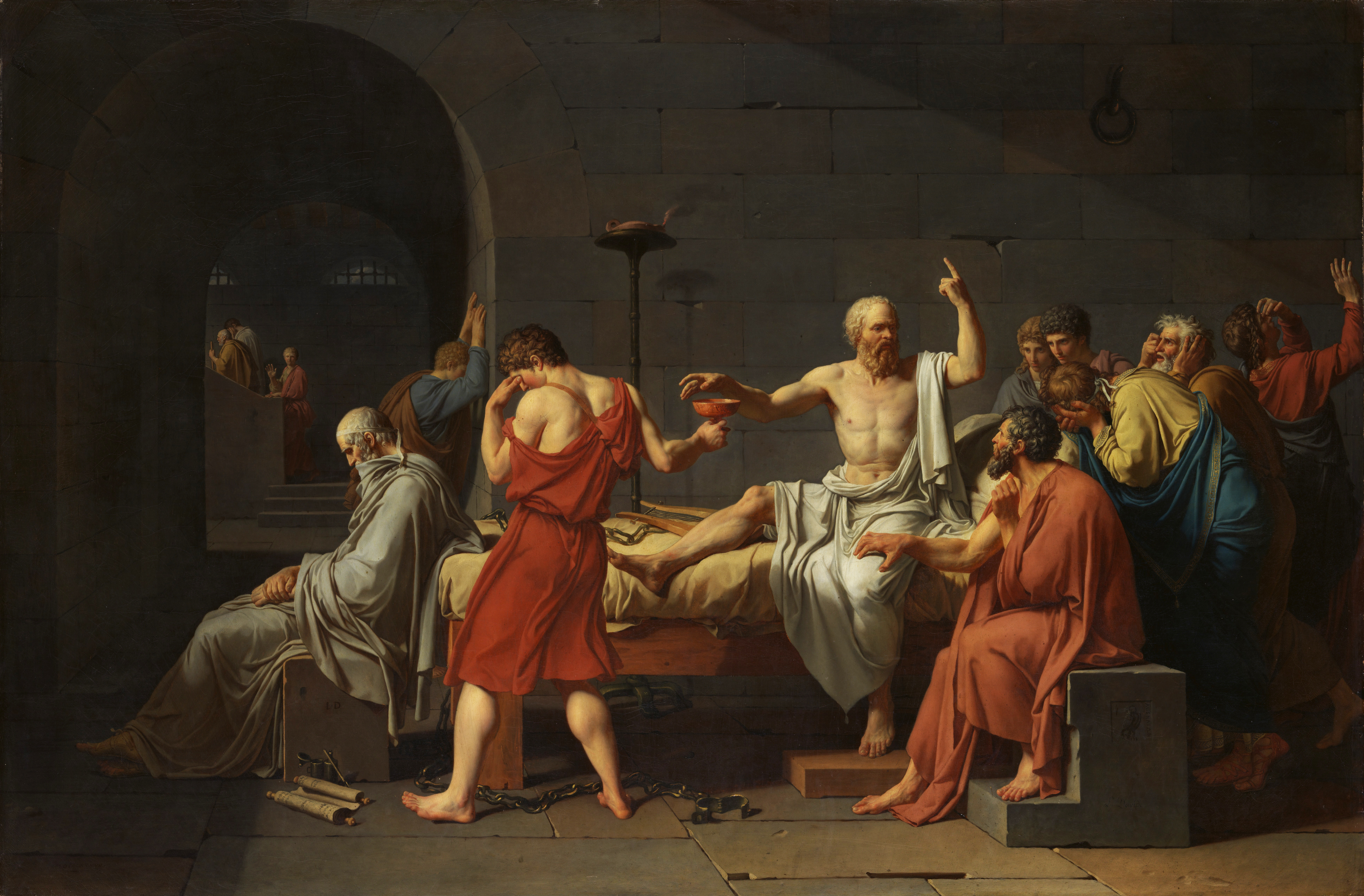
In this course, we will examine relations between the concepts of life and death by surveying a variety of ancient and modern philosophical accounts of them. We begin the course by exploring ancient philosophical practices designed to cultivate ways of thinking about death. We will be especially interested in how these specific practices of thinking about death helped determine various philosophical ways of life, distinct cultivated forms of thinking and acting. In doing so, we follow Pierre Hadot’s account of ancient philosophical practices in What Is Ancient Philosophy? and look at selected texts by Plato, Epicurus, Lucretius, Epictetus, Marcus Aurelius, among others. In the second half of the course, reading texts by Michel Foucault, Philippa Foot, Georg Simmel, and Michael Thompson, we investigate contemporary philosophical problems surrounding the concept of life. Here we will take a number of approaches: we will mark out certain historical questions about the cultivation of forms of life; we will discuss euthanasia; we will compare life to adventure. Finally, we will look at the treatment of forms of life, relations between ways of speaking and ways of doing, in particular the role of picturing in our understanding of speaking and doing, and death in Ludwig Wittgenstein’s Philosophical Investigations.
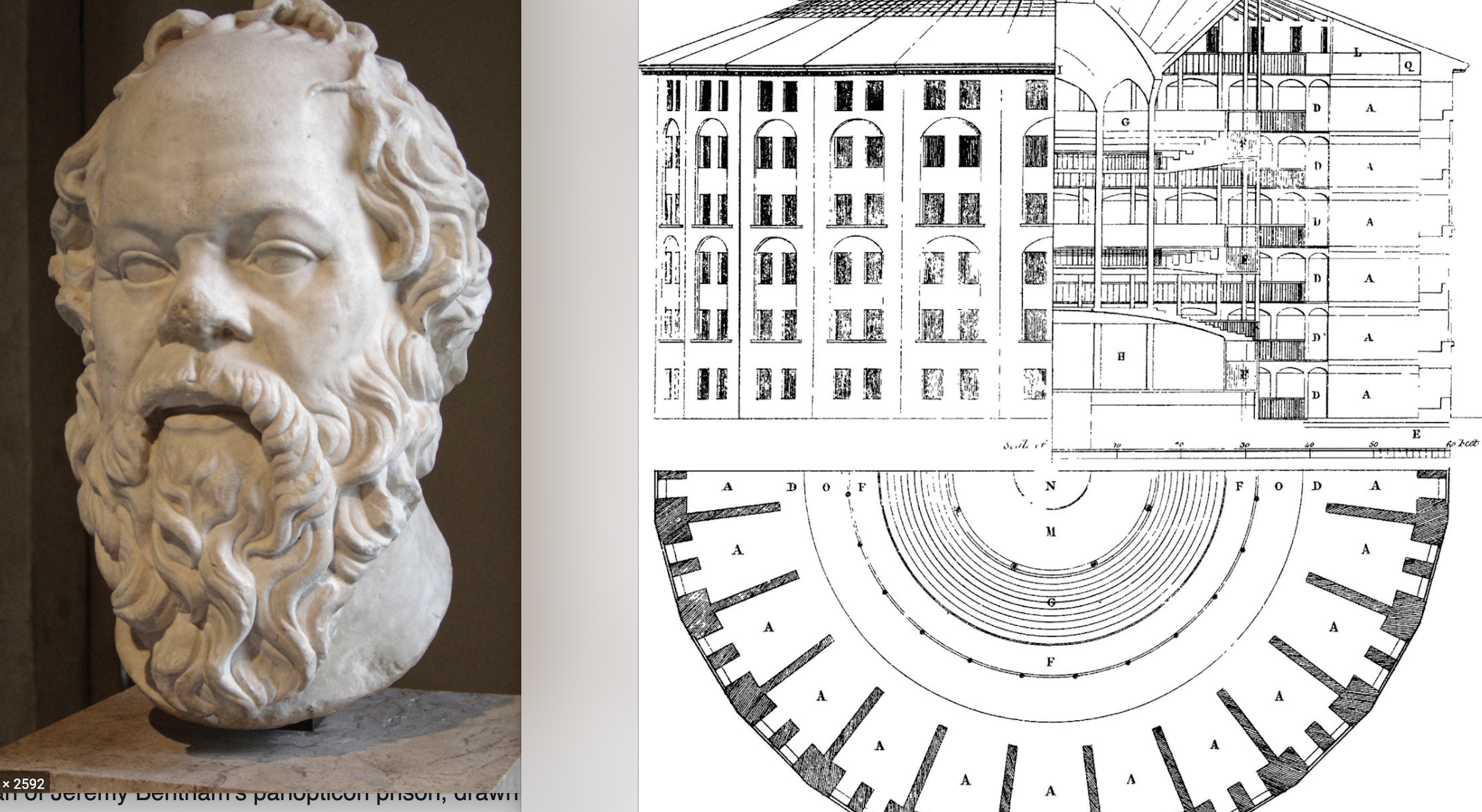
This course will review models, etiology, assessment, and intervention for various developmental and acquired disabilities. This course is organized through a lifespan developmental approach beginning with etiology diagnosis and moving through early intervention, special education, dating and sexuality, vocation, community involvement, and healthcare. Specific disabilities will be examined through a biopsychosocial lens. Autism spectrum disorder, AD/HD, intellectual disability, learning disabilities, traumatic brain injury, spinal cord injury, acquired blindness, and related conditions will be covered.
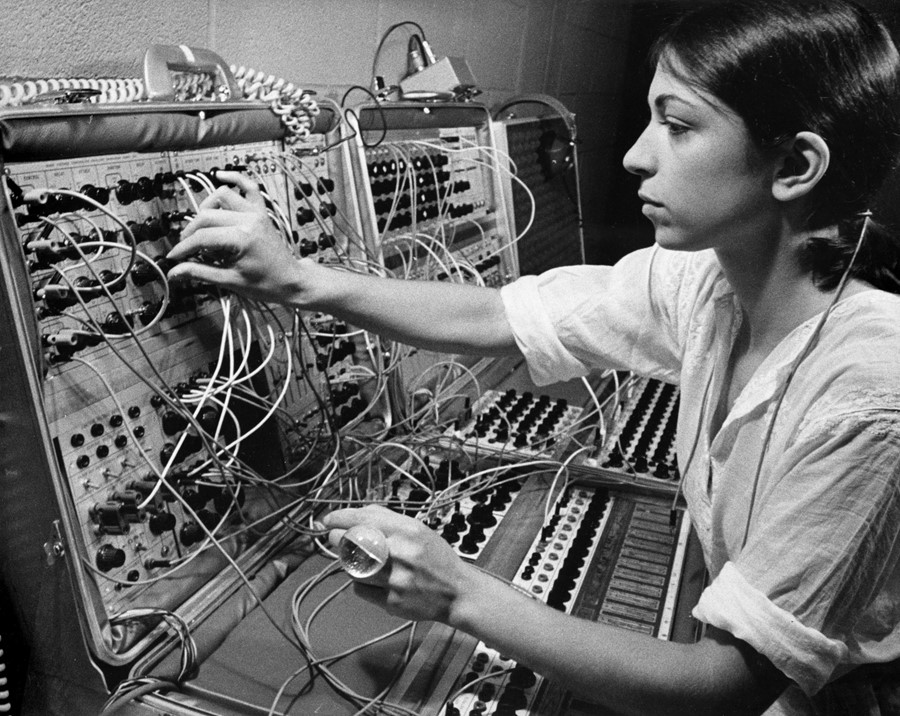
The transformation of sound into digital data has profoundly affected the creation, production and distribution of music. With the vast majority of music now mediated by some form of digitization, it has shaped even our most basic modes of listening. This course grapples with the implications of this technology, its history, and its broad range of uses and tools. In doing so, students will utilize the Knox Electronic Music Studio to explore the foundational techniques of audio production, synthesis, sampling, podcasting, film scoring, and interactive software development.
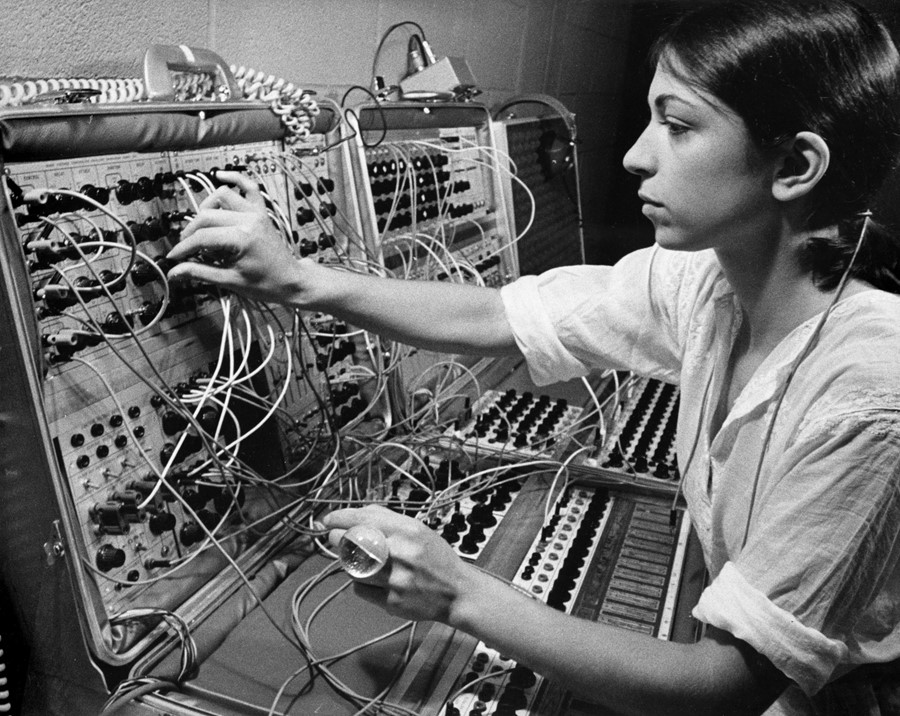

This course continues the themes and content from Digital Audio Production I, where students explored society’s digital reality through the creative, productive, and distributive processes of sound and music. As such, this course advances students’ technical knowledge by diving deeper into digital audio production through modular synthesis, advanced mixing projects, creative use of analog technologies blended with digital audio, computer music programming, as well as the theory and techniques of sound synthesis. In doing so, students will explore interactive and reactive creativity by deploying new and old technologies in unusual or critically relevant ways for musical composition.
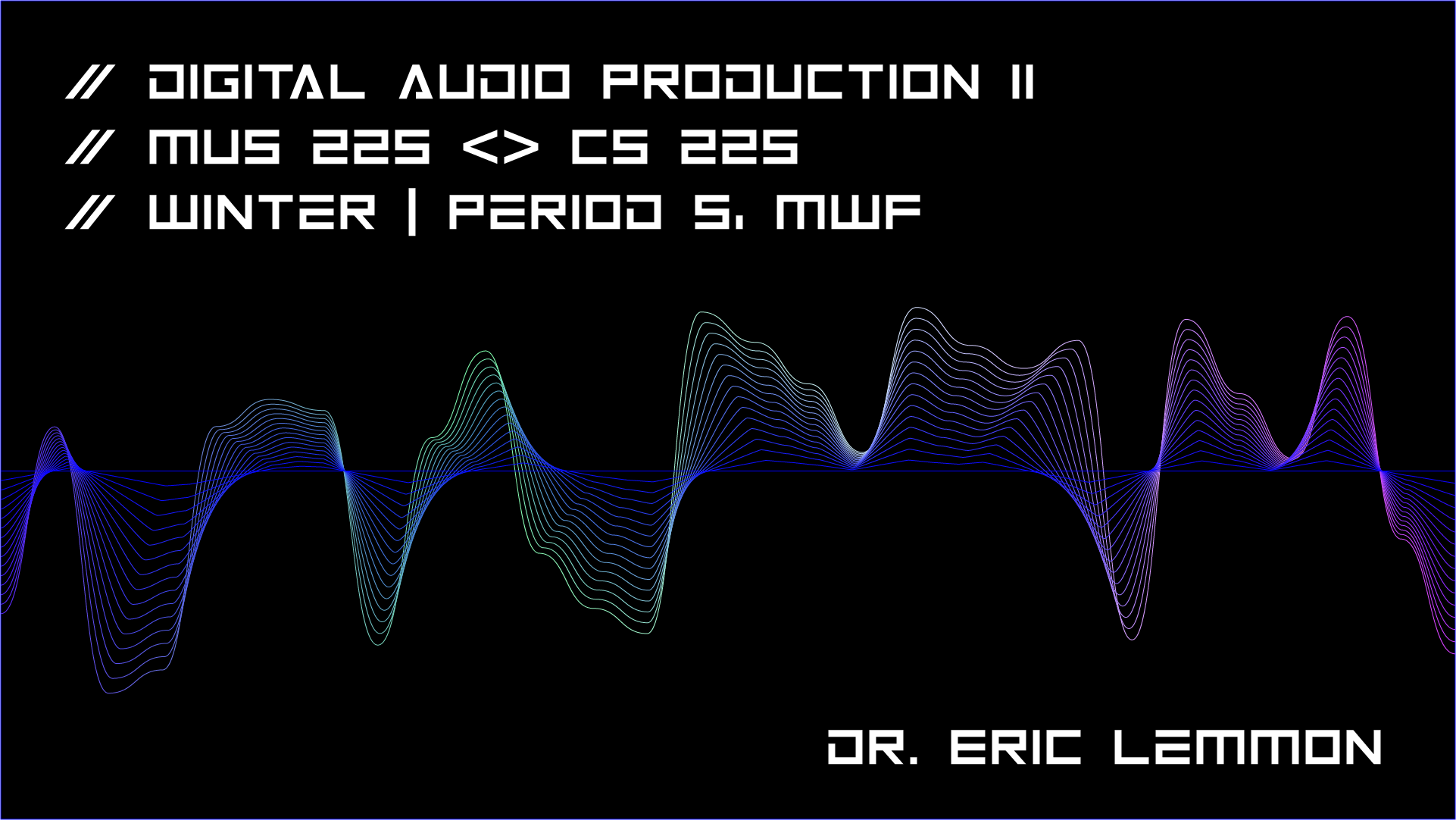
The transformation of sound into digital data has profoundly affected the creation, production and distribution of music. With the vast majority of music now mediated by some form of digitization, it has shaped even our most basic modes of listening. This course grapples with the implications of this technology, its history, and its broad range of uses and tools. In doing so, students will utilize the Knox Electronic Music Studio to explore the foundational techniques of audio production, synthesis, sampling, podcasting, film scoring, and interactive software development.

A study of discrete mathematical structures. Logic and proof, set theory, relations and functions, ideas of order and equivalence, and graphs
The prerequisites are MATH 151, or CS 141 together with MATH 131 (or similar).

What makes a representation truthful? What, if any, differences are there between representing an event and representing a form of life? What criteria should we use to determine the fidelity of representations? Is truth best thought of as a correspondence between a representation and reality? What norms govern activities involving truth-telling? Above all, why is truth-telling so important to us? In this course, we examine these and related issues in the context of the history of documentary and non-fiction films. In so doing, we investigate the particular problems the presence of the camera creates for documentary and non-fiction representations. By taking up a number of such films, we will investigate different standards used in depicting an event, telling a story, or representing a way of life. In addition to examining a number of films from documentary and non-fiction traditions, we will also look closely at a number of related philosophical and critical texts. We read texts by Michel Foucault, Friedrich Nietzsche, Gottlob Frege, Simon Blackburn, Judith Butler, bell hooks, Siegfried Kracauer and others. We watch films by Frederick Wiseman, the Maysles brothers, Jennie Livingston, Marlon Riggs, Orson Welles, Chris Marker, Agnes Varda, Barbara Koppel, Robert Flaherty, and others.
This course will introduce the three major philosophical systems of East Asian thought: Confucianism, Daoism, and Buddhism through their canonical texts. This historical approach will be supplemented by contemporary readings in each tradition. When taught as a component of the Japan Term, this course will pay special attention to the development of Japanese Buddhism, specifically Pure Land Buddhism (Amida Buddhism), Esoteric Buddhism (Shingon Buddhism) and Zen Buddhism (Soto and Rinzai).
This course will explore a range of literary and other cultural products in which the physical environment is figured as a means of self-expression, aesthetic response, and critical commentary. Key points of discussion include the symbolic structure and form of landscape in literature, (e.g., the green world of pastoral and wilderness); the connection between space, race and place; what we mean by the “environmental imagination”; the relationship between humans, non-humans and objects; and what we talk about when we talk about the Anthropocene.

Many of us are attracted to science because of the wonder of discovery and the (supposed) purity of the pursuit of knowledge. In this course we will wrestle with some of challenging questions that arise in the practice of science.
Ethics is centrally concerned with questions regarding relations with oneself and with others and, more generally, our ways of life together. In this course we will examine competing accounts of the self’s relation to itself and to others from the history of philosophy. What sorts of relations to self and others do these accounts call for? We will concern ourselves especially with the various roles played by justice, pleasure, utility, and the good in these philosophical accounts. We will devote ourselves to close readings of texts by Aristotle, Immanuel Kant, John Stuart Mill, Philippa Foot, Charles Mills, Cora Diamond, Elizabeth Anscombe, Ralph Waldo Emerson, and others.

Ethics is centrally concerned with questions regarding relations with oneself and with others and, more generally, our ways of life together. In this course we will examine competing accounts of the self’s relation to itself and to others from the history of philosophy. What sorts of relations to self and others do these accounts call for? We will concern ourselves especially with the various roles played by justice, pleasure, utility, and the good in these philosophical accounts. We will devote ourselves to close readings of texts by Aristotle, Immanuel Kant, John Stuart Mill, Philippa Foot, Charles Mills, Cora Diamond, Elizabeth Anscombe, Ralph Waldo Emerson, and others.

In this course, we examine some of the ethical challenges presented by business and describe a particular form of business practice, central to our thinking about ethics and business, one that we can generally identify as accounting. In doing so, we will first look at several theorists concerned to describe the structure of business, including the relations between labor and capital. What relations do we have to capital? What relations do we have to each other through exchange? Why do these relations call for accounting? Next, we will turn our attention to a number of texts from the history of ethics in order to trace different ways of thinking about relations of the self to self and others. In addition, we will examine the ways in which these ethical views differ as ways of accounting for one’s self and one’s productive activities. Finally, we will turn to a number of case studies from the history of business in order to explore the importance of various forms of accounting. Why are such accountings necessary? To whom are we accountable and why?

In this course, we examine some of the ethical challenges presented by business and describe a particular form of business practice, central to our thinking about ethics and business, one that we can generally identify as accounting. In doing so, we will first look at several theorists concerned to describe the structure of business, including the relations between labor and capital. What relations do we have to capital? What relations do we have to each other through exchange? Why do these relations call for accounting? Next, we will turn our attention to a number of texts from the history of ethics in order to trace different ways of thinking about relations of the self to self and others. In addition, we will examine the ways in which these ethical views differ as ways of accounting for one’s self and one’s productive activities. Finally, we will turn to a number of case studies from the history of business in order to explore the importance of various forms of accounting. Why are such accountings necessary? To whom are we accountable and why?

Ethics is centrally concerned with questions regarding relations with oneself and with others and, more generally, our ways of life together. In this course we will examine competing accounts of the self’s relation to itself and to others from the history of philosophy. What sorts of relations to self and others do these accounts call for? We will concern ourselves especially with the various roles played by justice, pleasure, utility, and the good in these philosophical accounts. We will devote ourselves to close readings of texts by Aristotle, Immanuel Kant, John Stuart Mill, Philippa Foot, Charles Mills, Cora Diamond, Elizabeth Anscombe, Ralph Waldo Emerson, and others.
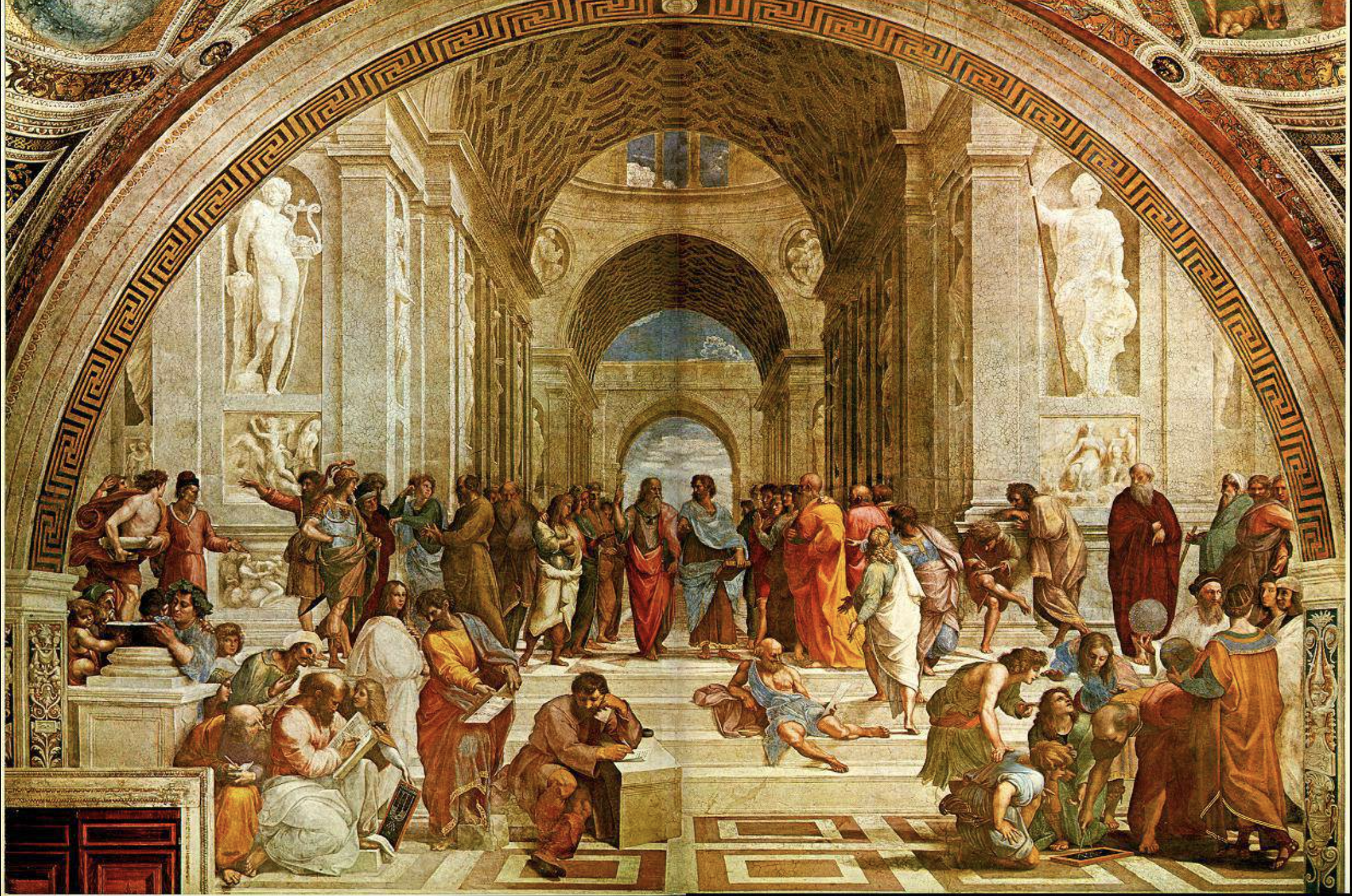
Ethics is centrally concerned with questions regarding relations with oneself and with others and, more generally, our ways of life together. In this course we will examine competing accounts of the self’s relation to itself and to others from the history of philosophy. What sorts of relations to self and others do these accounts call for? We will concern ourselves especially with the various roles played by justice, pleasure, utility, and the good in these philosophical accounts. We will devote ourselves to close readings of texts by Aristotle, Immanuel Kant, John Stuart Mill, Philippa Foot, Charles Mills, Cora Diamond, Elizabeth Anscombe, Ralph Waldo Emerson, and others.
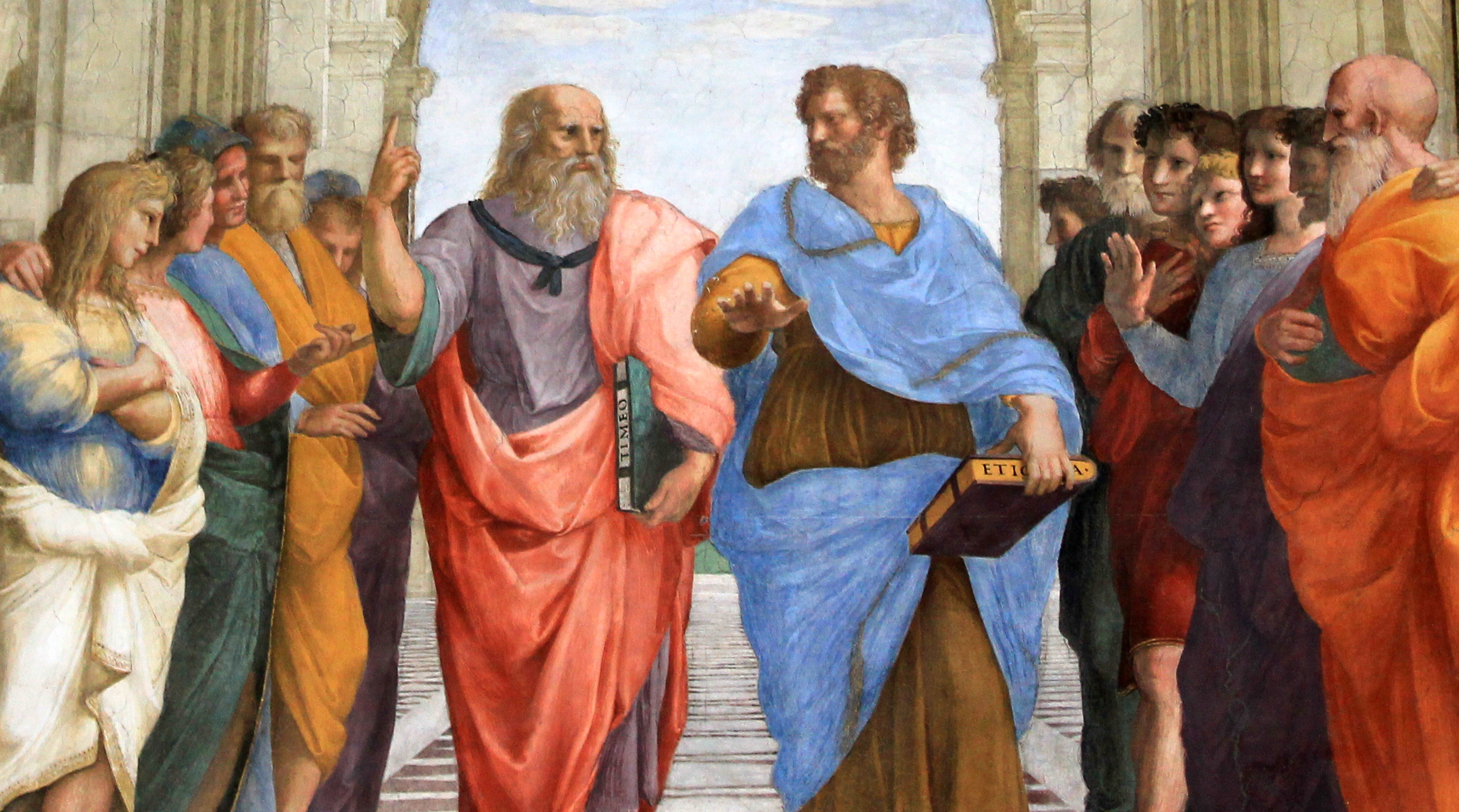

A comprehensive analysis of fairy tales as historical relics and dynamic cross-cultural products. To understand the distinctive nature of the fairy tale as both uniquely regional and (for the most part) universally recognizable, we’ll start with a question: What do we mean when we call something “a fairy tale”? (Also, what is the difference between a folk tale and a literary fairy tale? Who wrote the Arabian Nights? What about Grimm’s Fairy Tales? Which came first, Yeh-hsien or Cinderella? Why do we remember the gingerbread house from Hansel and Gretel but not the duck?) An additional consideration of fairy tale aesthetics, tropes, motifs, figures and structural classifications or tale types will guide our inquiry into the fairy tale form. Finally, in order to understand the fairy tale as a narrative underpinning or intertext for more complex forms of storytelling, we’ll first study the “classic” fairy tales (from Little Red Riding Hood to Blue Beard) and their variations, before turning our attention to the application of fairy tale elements in film and literature.
A comprehensive analysis of fairy tales as historical relics and dynamic cross-cultural products. To understand the distinctive nature of the fairy tale as both uniquely regional and (for the most part) universally recognizable, we’ll start with a question: What do we mean when we call something a “fairy tale”? (Also, what is the difference between an oral folk tale and a literary fairy tale? Who wrote the Arabian Nights? What about Grimm’s Fairy Tales? Which came first, Yeh-hsien or Cinderella? Why do we remember the gingerbread house from Hansel and Gretel but not the duck?) Beginning with the “classics” (from Little Red Riding Hood to Blue Beard) and their cultural variants, we’ll explore the “irresistible” appeal of the fairy tale in ancient and modern societies, as well as the elements of tale type, motif and aesthetic form within popular imagination and scholarly taxonomies of folk and fairy tales. Finally, we’ll consider the creative and cultural implications of adapting or revising the simple fairy tale into more complex forms of storytelling through literature, film and visual art.
Michel Foucault’s work analyzes the functioning of power as a field of relations within a set of social practices involving, characteristically, sexuality, policing, punishment, race, and mental illness, among other things. He is particularly interested to describe the development of these practices in order to make clear how their domains were created as the subjects of scientific discourse and in terms of which truth claims could be made. In this course, we track the development of Foucault’s theorizing the power relations that structure social practices and the truth claims that can be made about their domains. We end by considering Foucault’s late turn to ethics and the philosophical practices of the ancient world in light of his interest in the complex relations between power and truth.
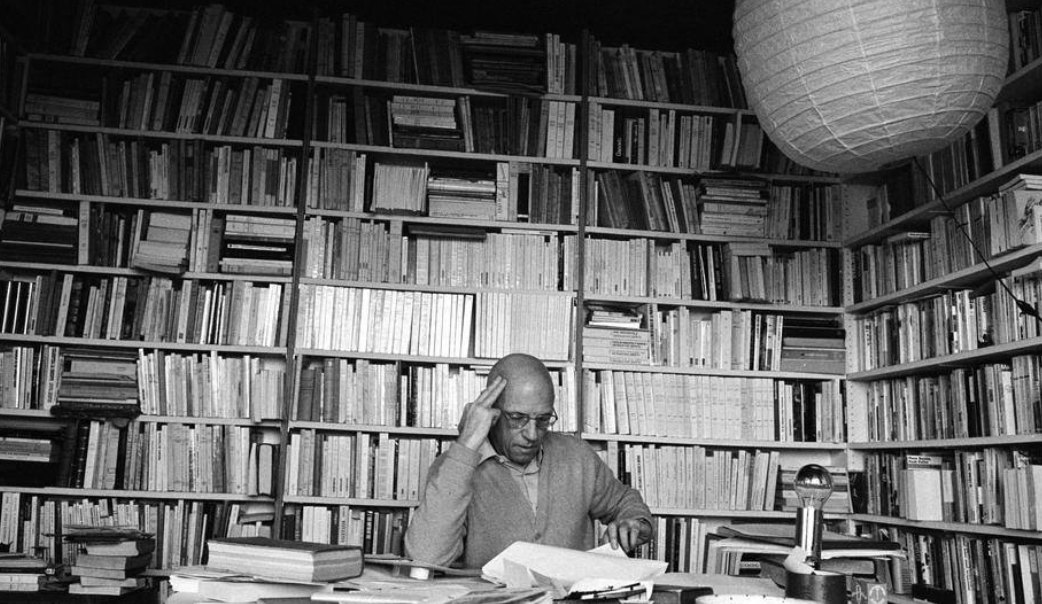
Our technological prowess has opened vistas for humanity to dream bigger, or perhaps it has simply revealed the cosmically (comically?) short timeframe of human existence and hence led us to imagine new ways for that existence to end. Extinction or evolution, one way or the other humanity is poised for transition. Will climate change force us to colonize other planets? Will we merge with machines by adding cyborg implants or, more radically, uploading our minds into robotic bodies?
The fear of human extinction and the promise of radical salvation through technology intertwine in a religious worldview unique to the contemporary world. We will explore this worldview and discuss the political and social implications of transferring our religious impulses and hope of salvation into technological forecasting.

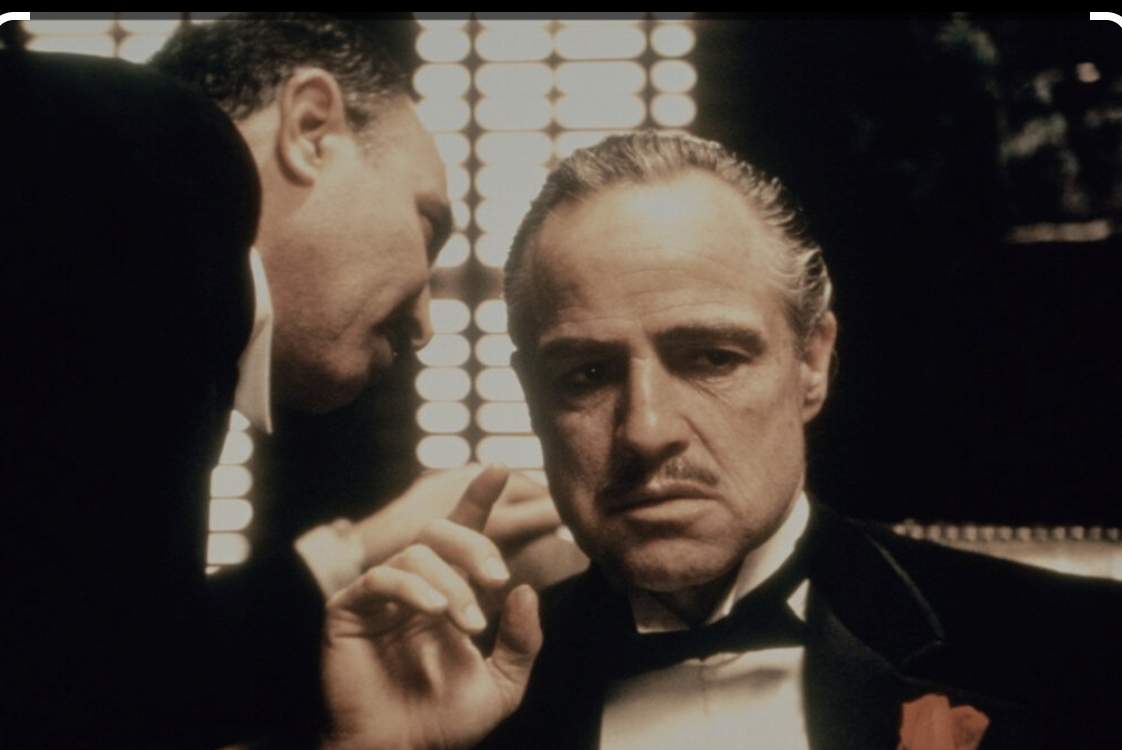
Gangster movies explore fantasies and anxieties shared by audiences increasingly required to imagine themselves in a world of unceasing competition between individuals. In this course, we look closely at Hollywood gangster movies from the 20th century in order to describe transformations in the shared terms and mechanisms through which individuals make practical decisions about their lives. We pay particular attention to the gangster movies of the 1970s and 1980s as studies in self-deception and rationalization. We approach the movies as philosophical texts and make sense of them in connection with written texts by Michel Foucault, Wendy Brown, Elizabeth Anscombe, and others.
Graphic design has begun to merge into programming in contemporary practice through creative coding. Open source tools, such as Processing and p5js, have been specifically developed to help visual artists and designers with this interest. This course will introduce students to manipulating form with these tools and processes. Interactive, generative art and design work will be explored through making. Students will be introduced to a range of contemporary artists and designers whose practice incorporates experimental programming. Additionally, we will explore the history and key figures who developed these tools. The course prioritizes the creative visual potential of computer programming beyond the pragmatic and functional.
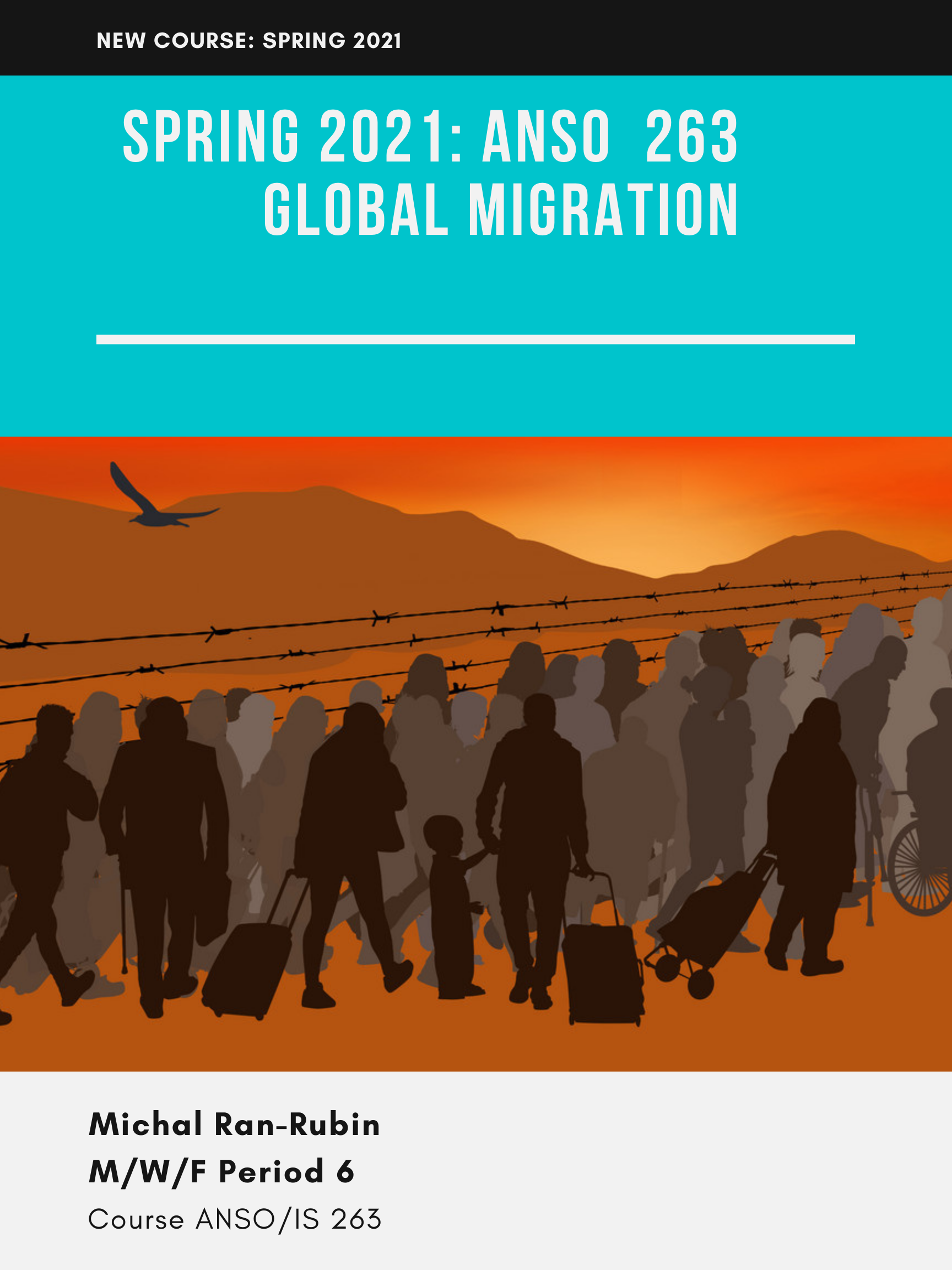
In recent years, profound changes in the global economy, climate change, and transnational politics have culminated in large movements of people in almost every region. This course examines how people experience displacement, migration, and statelessness; how home, community and belonging are reconstituted both in exile and through the making of diaspora communities. We will also pursue related questions about how international laws, national policies, and practices of social exclusion or inclusion influence the broader context of migration. How do population movements affect politics at the international, regional, and local levels – and vice versa? In what ways are relations of kinship, family, and gender being reformulated in response to transnational movements? Reading materials will include ethnographic studies of migrant and diaspora communities, policy reports on the international refugee regime, literary works produced by migrant authors, and a sampling of mainstream media reporting on immigration in the US and around the globe.
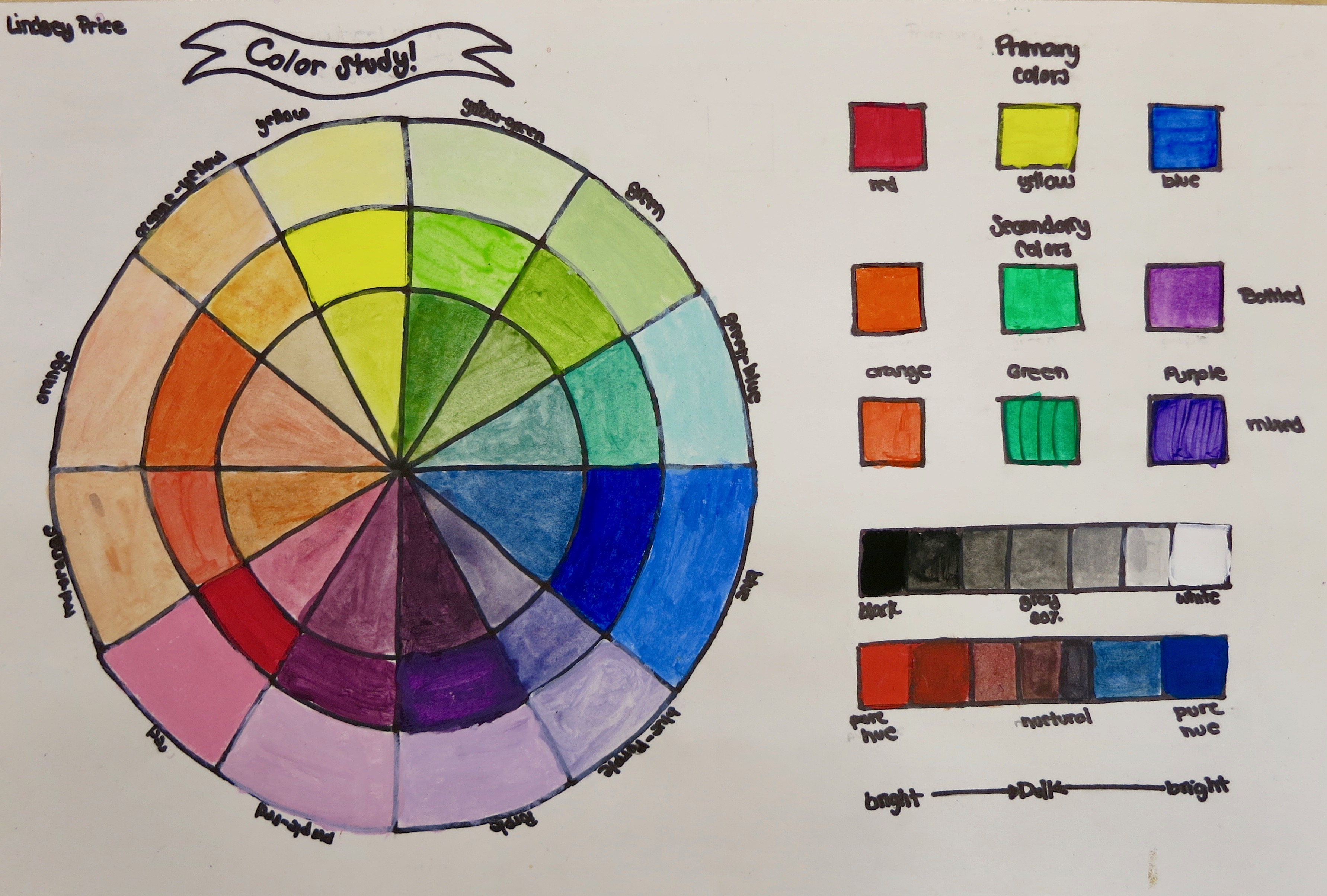
This course will introduce you to the language of form, design, and visual communication. The grammar of any language is a set of guidelines that allows one to build complex representations out of simple elements, thus communicating a given idea to those who encounter that representation. The language of vision is no less influential than that of the spoken or written word, yet we are often far less aware of its effect in our lives.
This course will introduce you to the language of form, design, and visual communication. The grammar of any language is a set of guidelines which allows one to build complex representations out of simple elements, thus communicating a given idea to those who encounter that representation. The language of vision is no less influential than that of the spoken or written word, yet we are often far less aware of its effect on our lives.
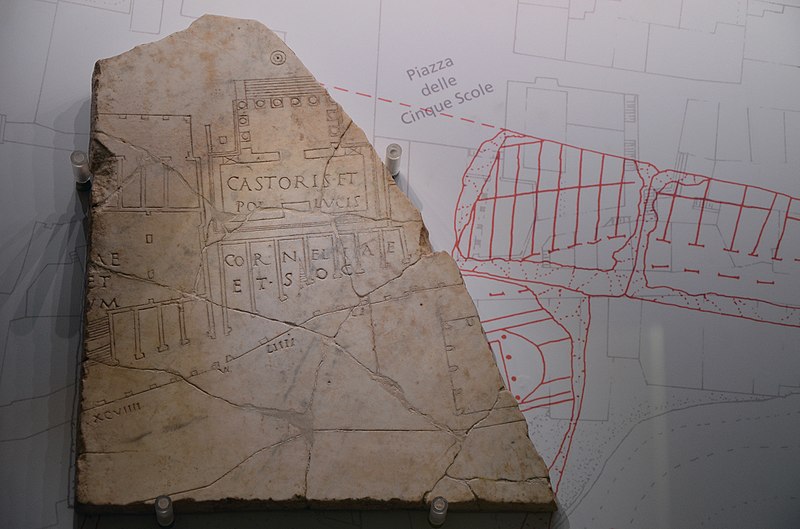
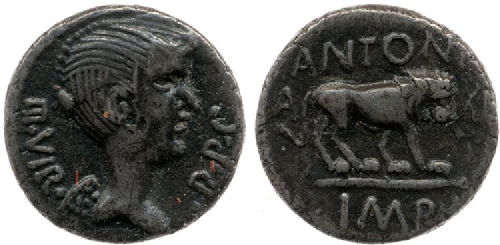
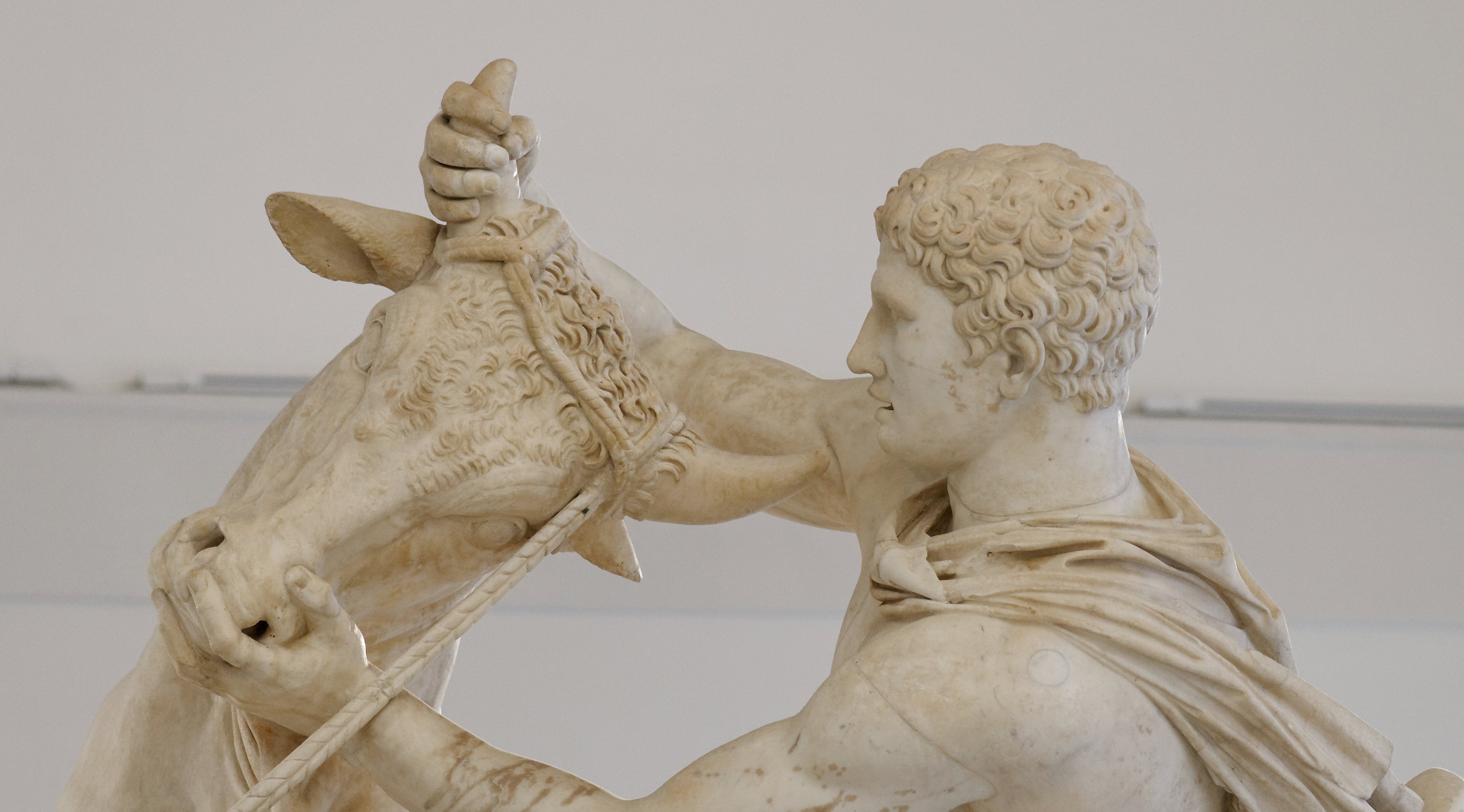
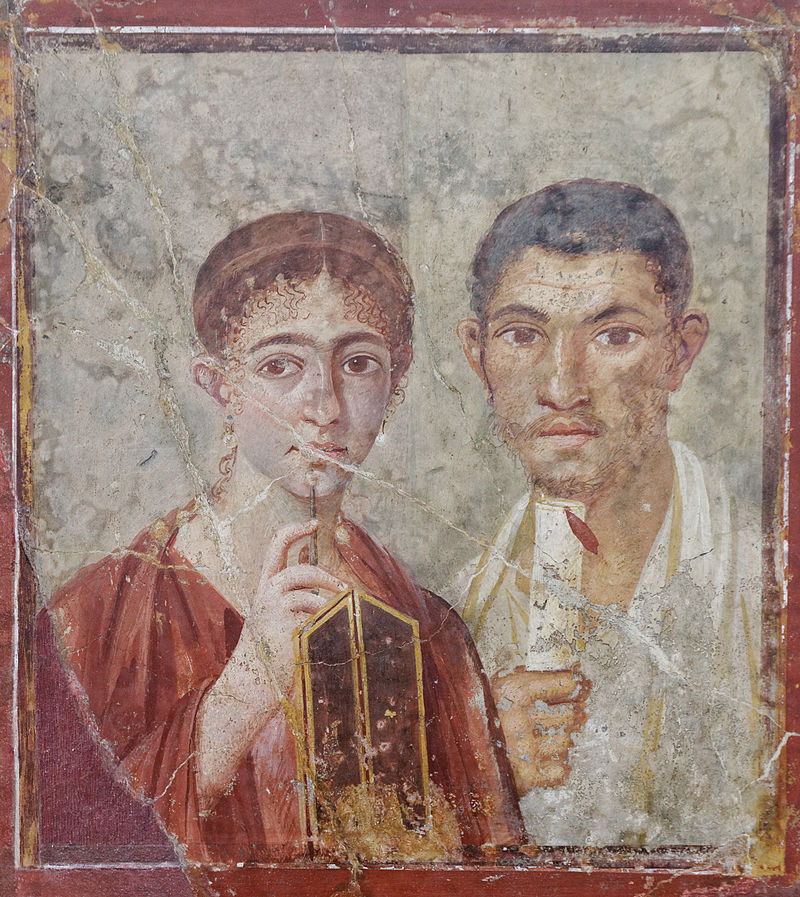
Rome grew from a third-rate market town on the Tiber River to the center of a Mediterranean-spanning empire. How did this happen? And why should we care? This class seeks to answer these questions and others as we examine the political history of the ancient city, its institutions, and cultural achievements.

Contemporary life is largely structured by shared practices of self-government. When we make decisions as consumers, as employees, as citizens, we decide what is best for ourselves and act in ways that businesses and other social institutions can coordinate. But what are the terms by which contemporary self-government occurs? In this course, we examine the modern history of reasoning about self-government in order to trace the emergence of contemporary neoliberal practices of self-government out of earlier liberal practices. We will read texts by Adam Smith, Michel Foucault, Frederick Douglass, Mary Wollstonecraft, Wendy Brown, Friedrich Hayek, Gary Becker, and others in order to grasp the development of techniques of self-government over the course of the 19th and 20th centuries.
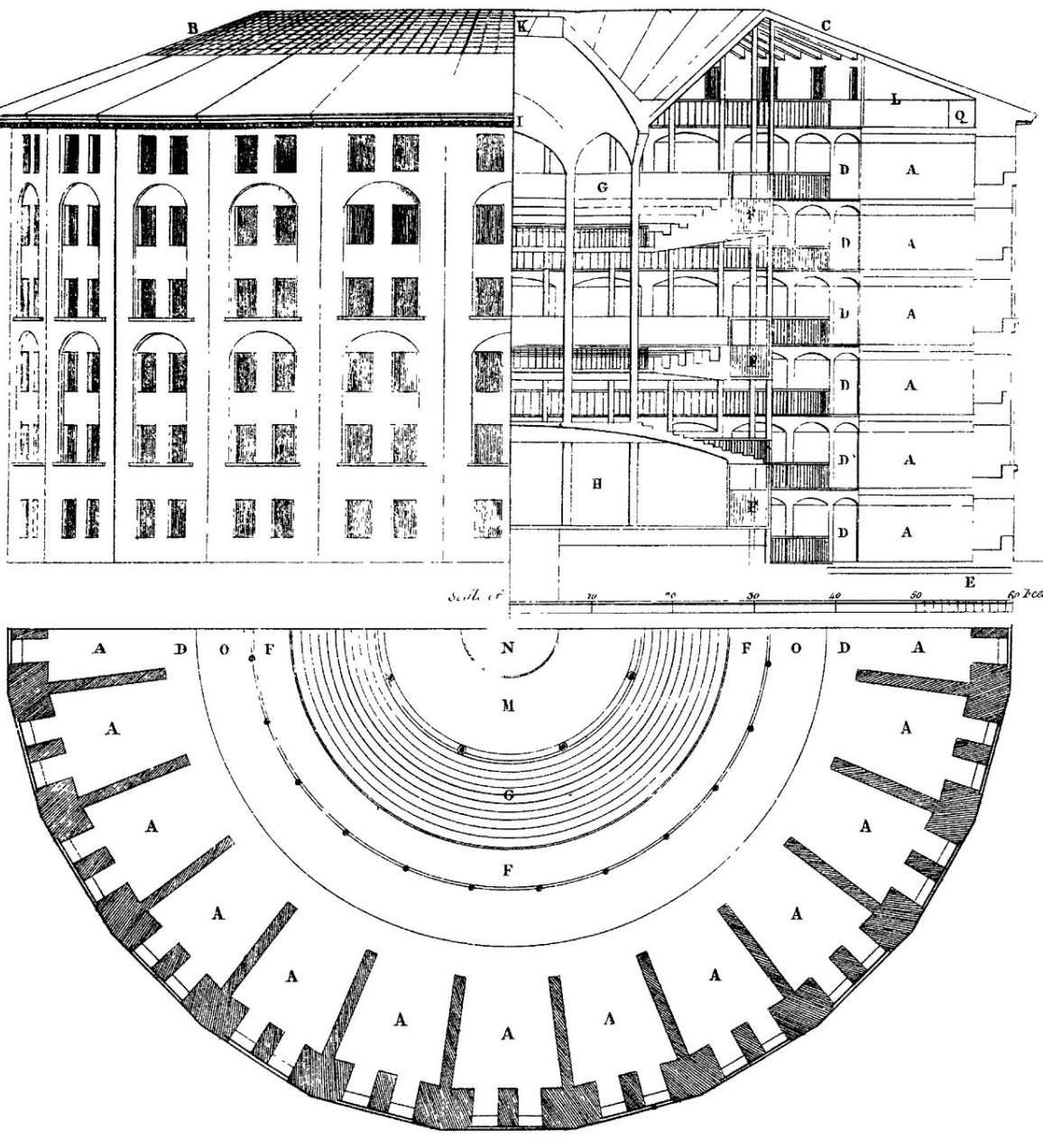
INSIDE-OUTSIDE EDUCATION (PJST 211-1 )
Class Meeting Time: 3S Period T/R (10:40 a.m. to 12:25 p.m.)
OLD MAIN 301
Professor: Leanne Trapedo Sims
Telephone: 309-341-7835 office
Email: ltrapedosims@knox.edu
Office Hours: R: 4-6 pm and by appointment: Borzello 128
This is a course designed to help the typical person in the United States (and beyond) properly interpret and understand the complexities of polls, especially political polls during election seasons. This interpretation necessitates an understanding of such terms as confidence intervals, credible intervals, and sampling effects, as well as an understanding of the electoral system.
There are no prerequisites for this course.



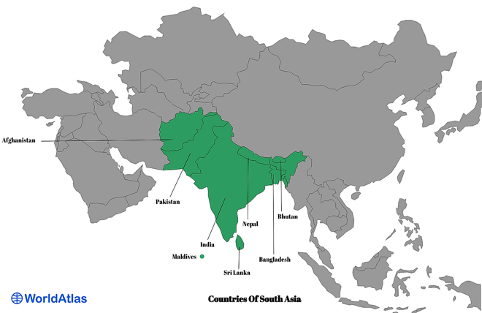
This course introduces the foundations of South Asian politics. It tries to incorporate the scope and breadth of the literature that has defined the study of South Asia. Its orientation is toward broader issues/concepts of world politics, using South Asia as a case. Students will become familiar with several issues/concepts like the colonial legacy, state-building and democratization, security architecture, political economy and development, foreign policy and regional organizations that matter to South Asian politics. Readings and analysis will be primarily focused on India, Pakistan, Sri Lanka and to a lesser extent, Afghanistan.
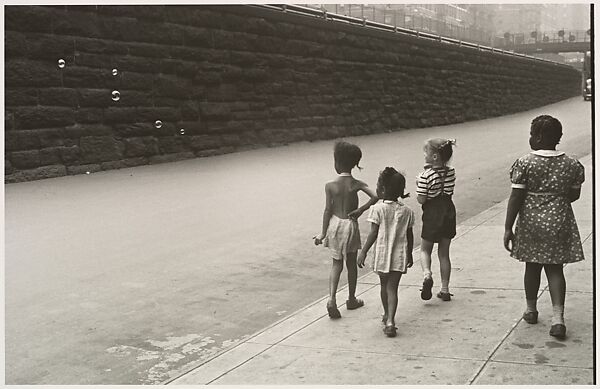
This course will explore various forms of children's literature, including domestic and historical fiction, the picture book, fantasy and realism, and the young adult novel. We will analyze children's literature using the same critical standards we apply to literature for adults, while at the same time recognizing the unique needs and responses of the child-audience. In addition, we will consider what it means to be a "reader" of children's literature; how we define a "classic"; the lack of representation in children's literature and publishing; the changing landscape of children's literature; our cultural assumptions about and fictional representations of childhood, home, and family; and the truths we offer children through literature. The class will follow a discussion rather than a lecture format.
Philosophy is the activity of self-conscious thinking reflecting on its own exercise and possibilities. In this course, we read a number of texts that require their readers to engage in this self-conscious exercise of the capacities for thinking and so potentially change their relation to their own thinking. In particular, we will pay particular attention to the forms of knowing and of skepticism each text articulates. In so doing, we will investigate several forms of philosophical criticism, analyzing each text as a distinct response to questions such as: How do we know? What criteria do we have for knowing that we know?
This course is designed to help students become fluent enough in Python to be able to analyze several types of data. Topics include installing Python, variable types, loading data, exploring data, formulating research questions, performing basic statistical analyses, interpreting those analyses, creating appropriate graphics, and present the results from the analyses in a meaningful manner.
→ This class meets MWF during the last five weeks of Fall Term (October 18 onward).
There are no prerequisites for this course.

This is a basic statistics course for undergraduate students. It is a study of the acquisition, presentation, analysis, and interpretation of data. Topics include descriptive statistics and statistical graphics, experiments vs. observational studies, elementary probability, random variables and distributions, sampling distributions of statistics, confidence intervals, hypothesis testing for means and proportions, correlation, linear regression, and an introduction to ANOVA.
The prerequisites are the satisfaction of the Mathematics Proficiency requirement.

This is a basic statistics course for undergraduate students. It is a study of the acquisition, presentation, analysis, and interpretation of data. Topics include descriptive statistics and statistical graphics, experiments vs. observational studies, elementary probability, random variables and distributions, sampling distributions of statistics, confidence intervals, hypothesis testing for means and proportions, correlation, linear regression, and an introduction to ANOVA.
The prerequisites are the satisfaction of the Mathematics Proficiency requirement.

kkogut testing
An exploration of the physical geographies of space and place (ancient and modern, rural and urban) in children’s literature as signifiers of “childhood”; i.e., of the textually constructed child figure and of textually constructed childhoods as a whole. While the application of Jane Suzanne Carroll’s “topoanalysis,” is relatively narrow, focusing on the historical, cultural, and mythic landscape features repeatedly represented throughout British literature in general and the British fantasy series, The Dark is Rising in particular, the aim of the course is to extend this application outward to more diverse landscapes (real and imaginary) represented in a variety of texts written for children and young adults.
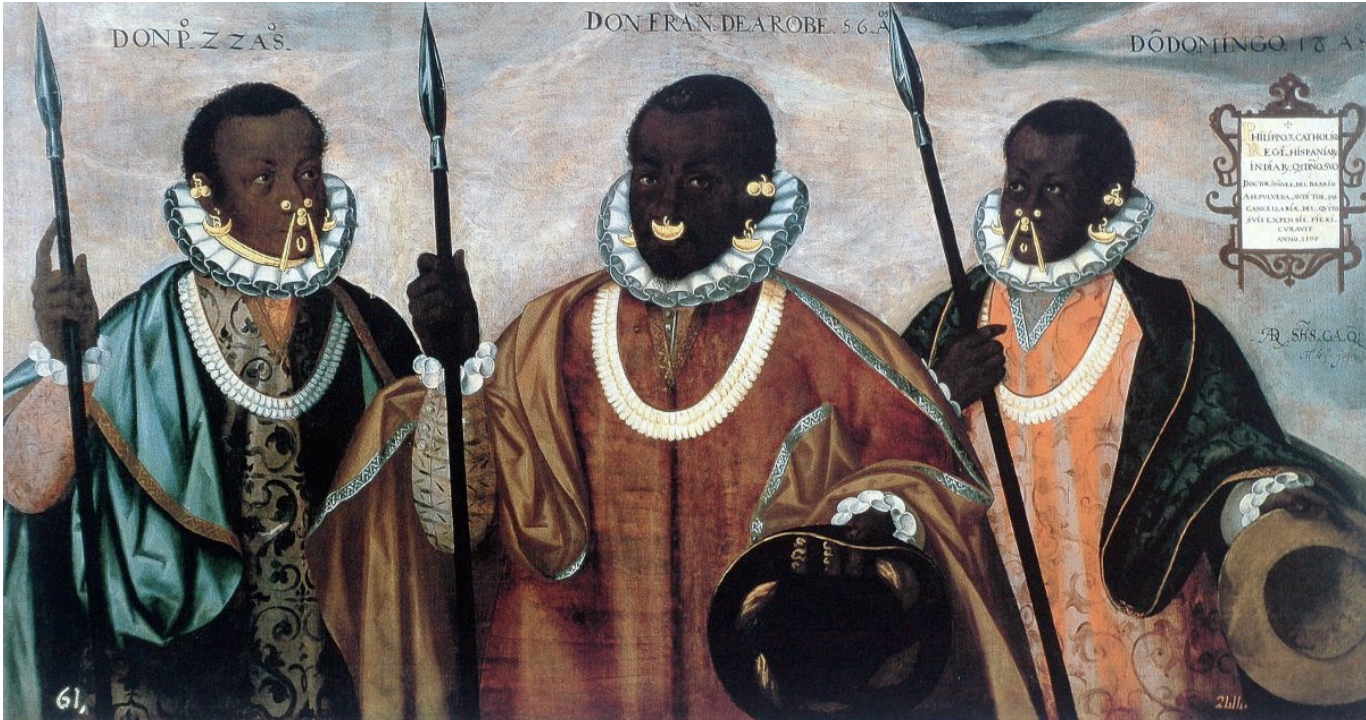
This course provides an introduction to the art, visual culture, and architecture of colonial, modern, and contemporary Latin America. The first half of the course will examine early contact between Europeans and Indigenous Americans, with an overview of the importation, adaptation, and responses of European artistic models in the Americas. We will analyze the transformation of Indigenous artistic traditions as a result of the European colonial project in the Americas (1492-ca–1820) through a variety of materials and topics, including, religious architecture, painting, prints, sculpture, and manuscripts drawings. The second half of the course will examine art from the early nineteenth century to the present, considering the role of the arts in building independent nations and creating shared artistic legacies constantly adapting and/or responding to outside influences. By analyzing current art historical debates, in the field of Latin American art, between national vs. cosmopolitan aesthetics, Hemispheric and Inter-American projects for continental unity we will see how Latin American artists negotiated issues of identity and contributed to the development of modern and contemporary art. We will explore twentieth-century Latin American visual arts through photography, manifestos, magazines, performances, exhibitions, and ephemera with a special focus on new technologies and global changes.
STAT 225: Linear Models and Statistical Software
This course develops further the ideas and techniques that were introduced in STAT 200 relative to regression modeling and experimental design, understood as instances of a matrix linear model. In addition, the student becomes familiar with at least one leading statistical package for performing the intensive calculations necessary to analyze data. Topics include linear, non-linear, and multiple regression, model-building with both quantitative and qualitative variables, model-checking, logistic regression, experimental design principles, ANOVA for one-, two-, and multiple factor experiments, and multiple comparisons.
Prerequisites: STAT 200, MATH 145 or 151, and MATH 185.
Cross-listed as MATH 225

STAT 225: Linear Models and Statistical Software
This course develops further the ideas and techniques that were introduced in STAT 200 relative to regression modeling and experimental design, understood as instances of a matrix linear model. In addition, the student becomes familiar with at least one leading statistical package for performing the intensive calculations necessary to analyze data. Topics include linear, non-linear, and multiple regression, model-building with both quantitative and qualitative variables, model-checking, logistic regression, experimental design principles, ANOVA for one-, two-, and multiple factor experiments, and multiple comparisons.
Prerequisites: STAT 200, MATH 145 or 151, and MATH 185.
Cross-listed as MATH 225

MATH 121: Mathematical Ideas
This course offers an introduction to the history and concepts of elementary mathematics. Topics may include properties of number systems, geometry, analytic geometry, mathematical modeling, and probability and statistics.
Prerequisites: None

An advanced study of probability theory. Sample spaces, random variables and their distributions, conditional probability and independence, and the transformations of random variables.
The prerequisites are MATH 205 (Calculus III) and MATH 210 (Linear Algebra).

MATH 322: Mathematical Statistics II
A rigorous study of the theory of statistics with attention to its applications. Point and interval estimation, hypothesis testing, regression and correlation, goodness-of-fit testing, and analysis of variance.
Prerequisite: MATH 321

MATH 322: Mathematical Statistics II
A rigorous study of the theory of statistics with attention to its applications. Point and interval estimation, hypothesis testing, regression and correlation, goodness-of-fit testing, and analysis of variance.
Prerequisite: MATH 321

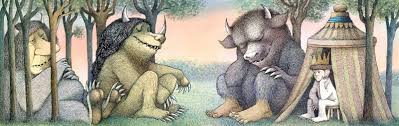
A critical and comprehensive study of Sendak's key works for children, including the groundbreaking picture book trilogy: Where the Wild Things Are, In the Night Kitchen, and Outside Over There; the aesthetic influences (from Mozart to Blake to Laurel and Hardy) that inform Sendak's narrative art; and Sendak as a cultural force whose modern mythology helped redefine our notions of childhood and whose pop cultural reach has extended from Broadway to Spike Jonze films to wild thing hoodies. Of special consideration is the figure of the child in Sendak's work, its origins as well as its monstrous and angelic incarnations.
It is common to think of human perception as essentially causal in nature, to think of perception as something that happens when the world impinges on us, causing us to react to it. This view mistakes perception as passively reactive to the causal powers of the world around us and misunderstands the role perception can play in our practical reasoning. An instance of perception can function as a reason for action and not merely play a causal role in a chain of events; for example, if I see that you are upset and comfort you, my perception of your sadness functions as a reason for comforting you. In this course, we will examine perception’s capacity to function as a reason for acting and not merely as a one more link in a causal chain. The course is structured around the wager that the key to understanding perception’s capacity to be a reason for acting is the role that memory plays in shaping our capacities for perception. We will trace competing accounts of relations between memory and perception from the history of philosophy, paying particular attention to modern and contemporary accounts of memory and perception, and focusing especially on the work on Henri Bergson. The course opens and closes with careful attention to Bergson’s Matter and Memory; this attention is attenuated and sustained by examining accounts of memory from Elizabeth Anscombe, Friedrich Nietzsche, Sigmund Freud, Maurice Merleau-Ponty, Walter Benjamin, and Stanley Cavell. We will also watch movies by Orson Welles, Chris Marker, and others.

It is common to think of human perception as essentially causal in nature, to think of perception as something that happens when the world impinges on us, causing us to react to it. This view mistakes perception as passively reactive to the causal powers of the world around us and misunderstands the role perception can play in our practical reasoning. An instance of perception can function as a reason for action and not merely play a causal role in a chain of events; for example, if I see that you are upset and comfort you, my perception of your sadness functions as a reason for comforting you. In this course, we will examine perception’s capacity to function as a reason for acting and not merely as a one more link in a causal chain. The course is structured around the wager that the key to understanding perception’s capacity to be a reason for acting is the role that memory plays in shaping our capacities for perception. We will trace competing accounts of relations between memory and perception from the history of philosophy, paying particular attention to modern and contemporary accounts of memory and perception, and focusing especially on the work on Henri Bergson. The course opens and closes with careful attention to Bergson’s Matter and Memory; this attention is attenuated and sustained by examining accounts of memory from Elizabeth Anscombe, Friedrich Nietzsche, Sigmund Freud, Maurice Merleau-Ponty, Walter Benjamin, James Baldwin, and Stanley Cavell. We will also watch movies by Orson Welles, Chris Marker, and others.
Music Research Methods is an introduction to the disciplines, methodologies, history and discourses of the study of Western art music. The practices of academic writing and thinking play a large role in the assignments and activities in this course, which culminate in a research proposal and bibliography developed from an initial research question.
Kant’s work marks a decisive turn for modern thinking. In this course, we trace different ways of responding to two basic Kantian insights: that freedom depends on acknowledging our ability to give ourselves laws and that contemporary reality is best analyzed in terms of forms of experience and the conditions that make particular forms of experience possible. We trace these responses in the works of Wollstonecraft, Hegel, Marx, Douglass, DuBois, Emerson, Nietzsche, and others. Our emphasis in reading these texts is on identifying ways in which these thinkers offer tools for helping us to better understand contemporary forms of experience.
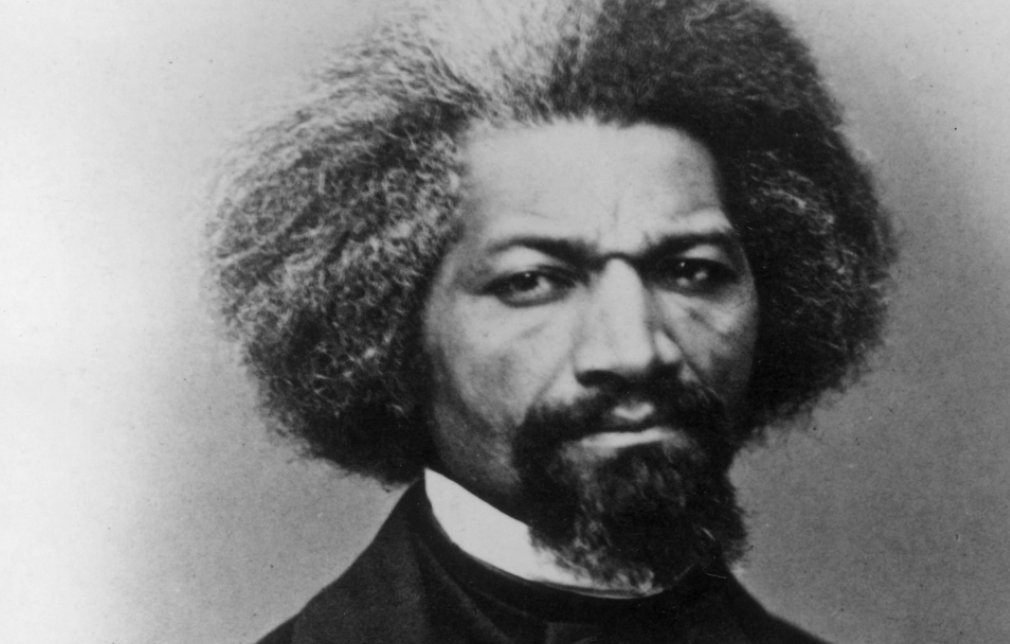
Kant’s work marks a decisive turn for modern thinking. In this course, we trace different ways of responding to two basic Kantian insights: that freedom depends on acknowledging our ability to give ourselves laws and that contemporary reality is best analyzed in terms of forms of experience and the conditions that make particular forms of experience possible. We trace these responses in the works of Wollstonecraft, Hegel, Marx, Douglass, DuBois, Emerson, Nietzsche, and others. Our emphasis in reading these texts is on identifying ways in which these thinkers offer tools for helping us to better understand contemporary forms of experience.

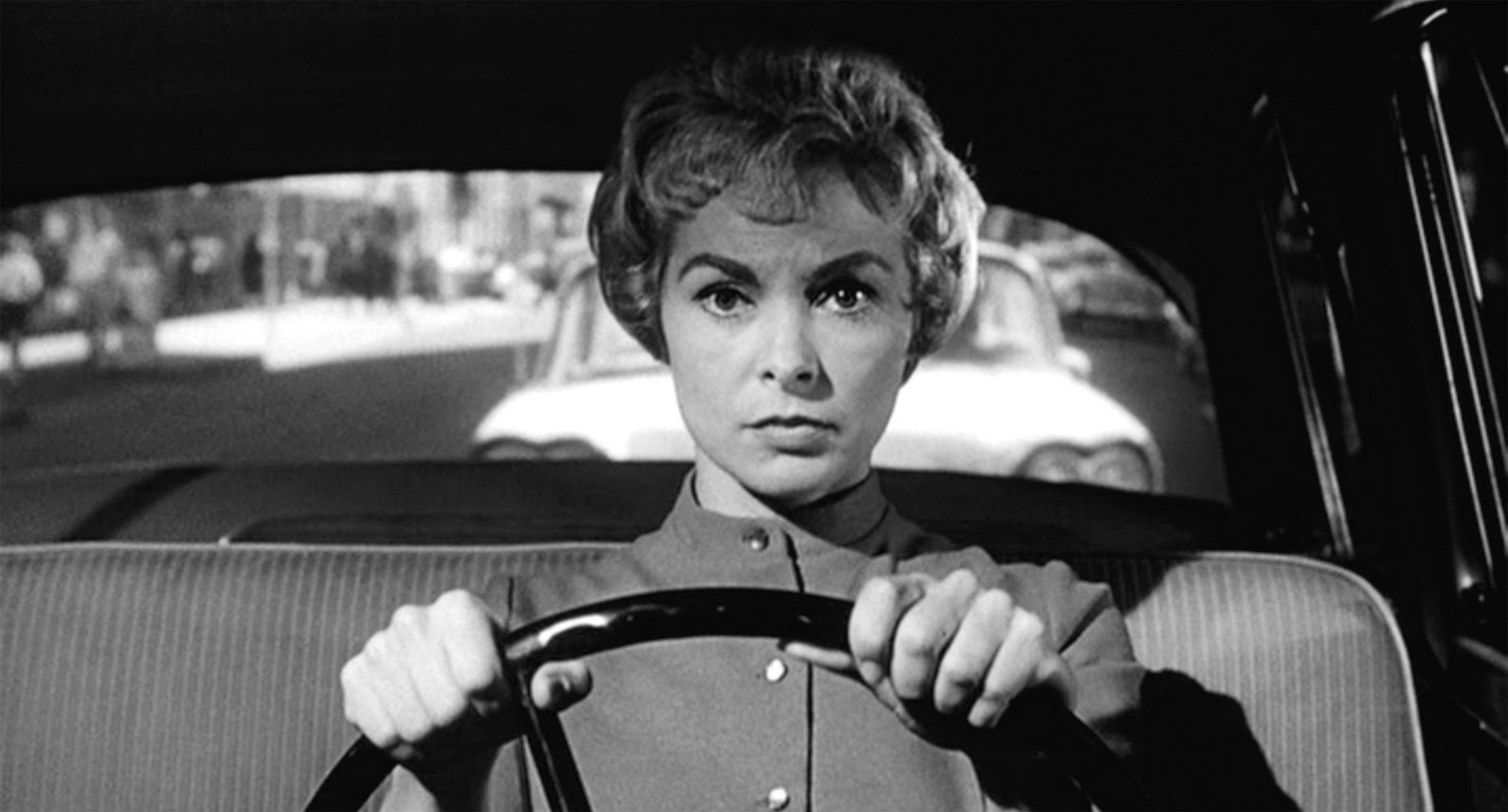
In this course we explore film as a capacity to depict action. In so doing we develop terms by which we can recognize the emergence of film as an event in the history of thought and perception. Our method will be two-fold: we will look at examples from the history of American film to identify certain historical dispositions—early actualities, movies, animation, gangster movies, and so on. Equally we will bring out one particular aspect of film: its power for physiognomic revelation: that is to say, its capacity to reveal human character through the depiction of bodies in action. In so doing we will contrast film with another mode of psychological understanding: psychoanalysis. We will read texts by Plato, Diderot, Lessing, Baudelaire, Freud, Bazin, Cavell, Warshow, Bergson, and others. We will watch movies by the Lumière brothers, Griffith, Keaton, Hawks, Capra, Astaire, Sturges, Lubitsch, Hitchcock, Scorsese, Tarantino, Riley, Haynes, Burnett, and others.
If you're a Knox student hoping to pursue a career in medicine (MD or DO), MD/PhD, nursing, pharmacy, occupational therapy, physical therapy, veterinary therapy, dentistry, or public health, check out the resources within this classroom. Videos, powerpoint slides, workshop sessions, website links, resources to explore and learn how to get opportunities, and more!

Ecology is the scientific study of the interactions that determine the distribution and abundance of organisms. During this course we will gain an understanding of many kinds of interactions, both biotic and abiotic, that regulate ecological population size and community structure. Ecological communities are exceedingly complex and we will also try to understand what makes those communities so complex. We will emphasize the importance of place and past history as factors that influence current ecology.
PRISON EDUCATION: A PRACTICUM (PJST 211-1 )
Class Meeting Time: 5S Period T/R (12:45 p.m. to 2:30 p.m.)
OLD MAIN 301
Professor: Leanne Trapedo Sims
Telephone: 309-341-7835 office
Email: ltrapedosims@knox.edu
Office Hours: R: 4-6 pm and by appointment: Borzello 128
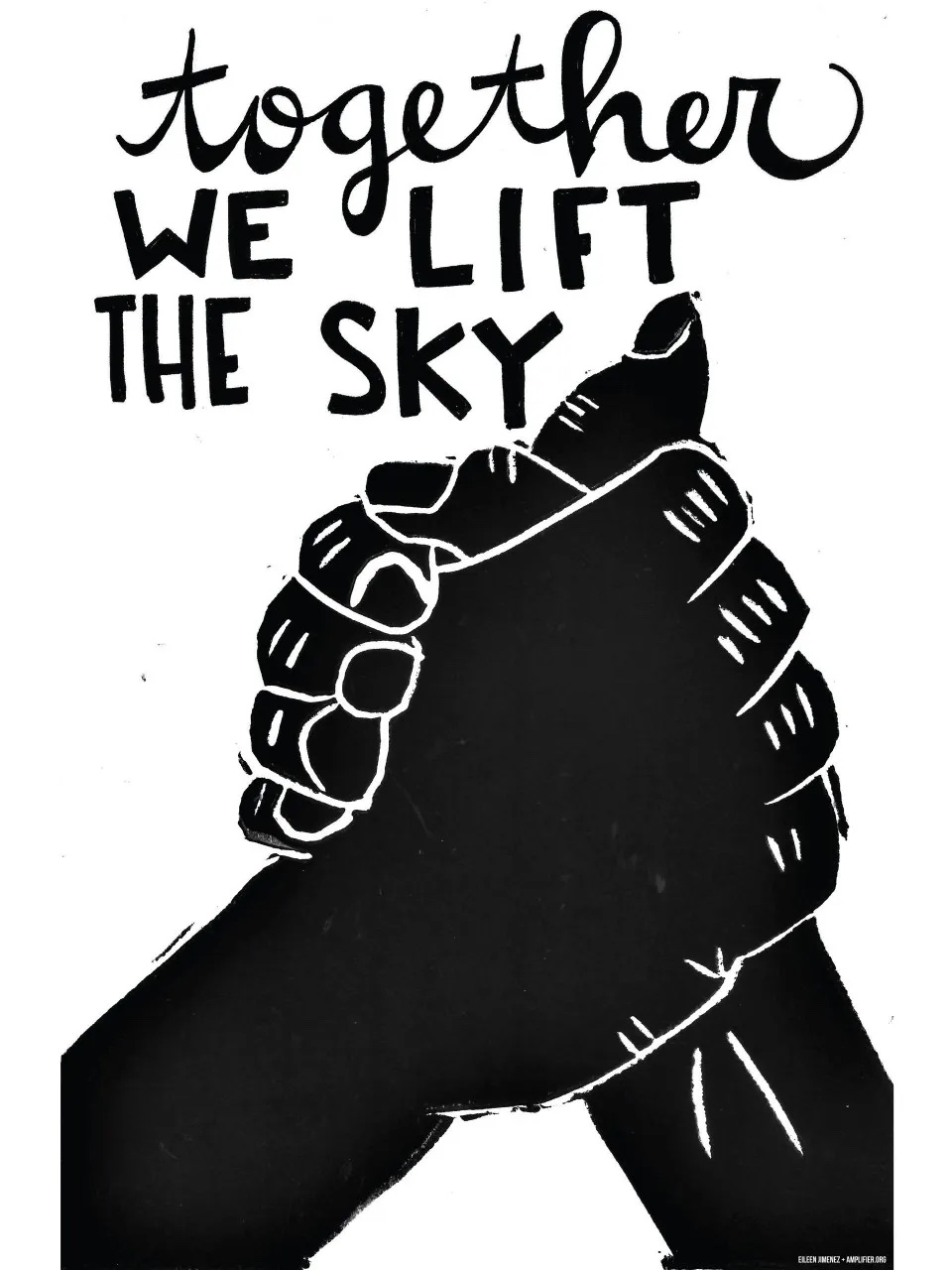
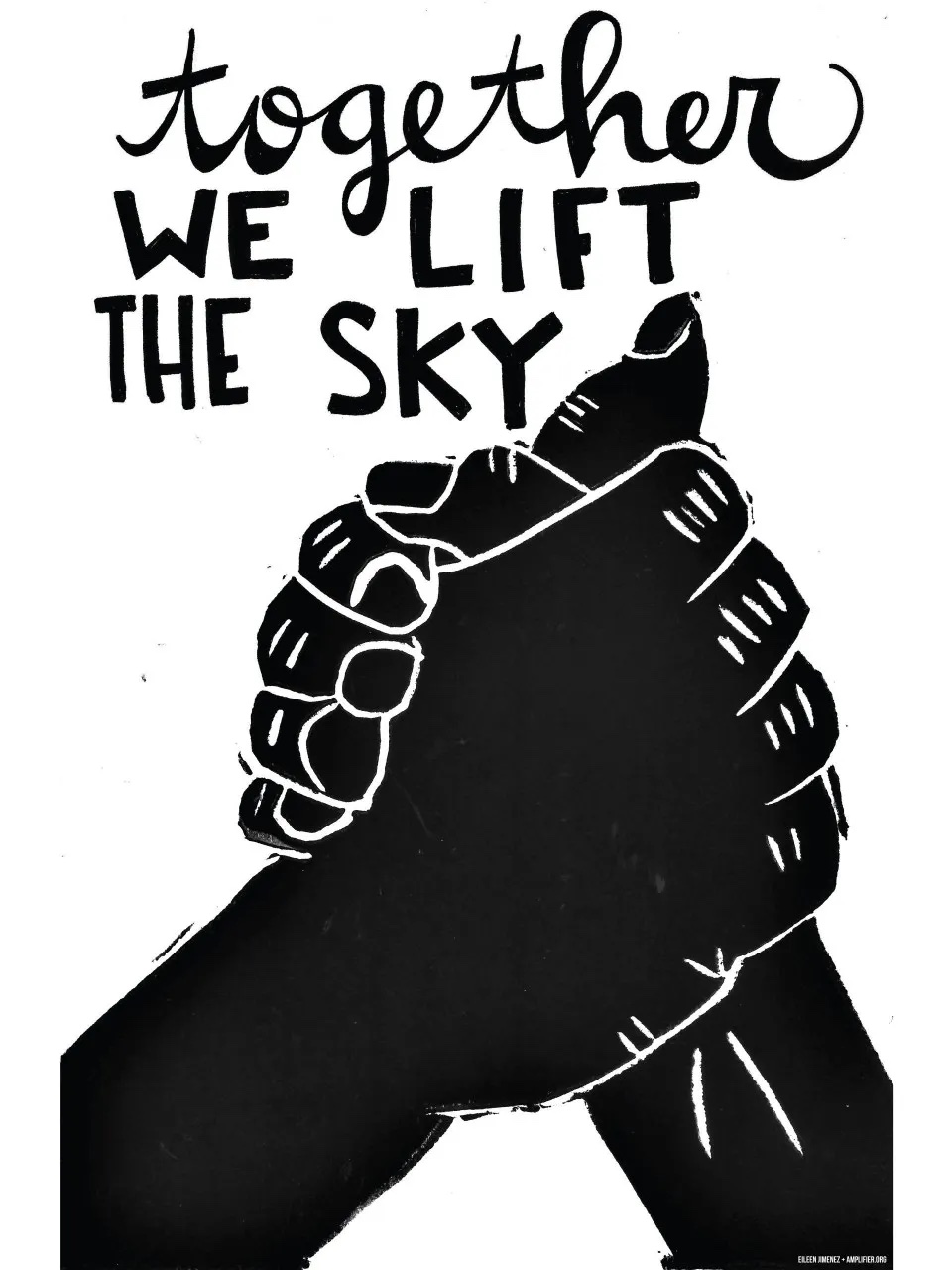
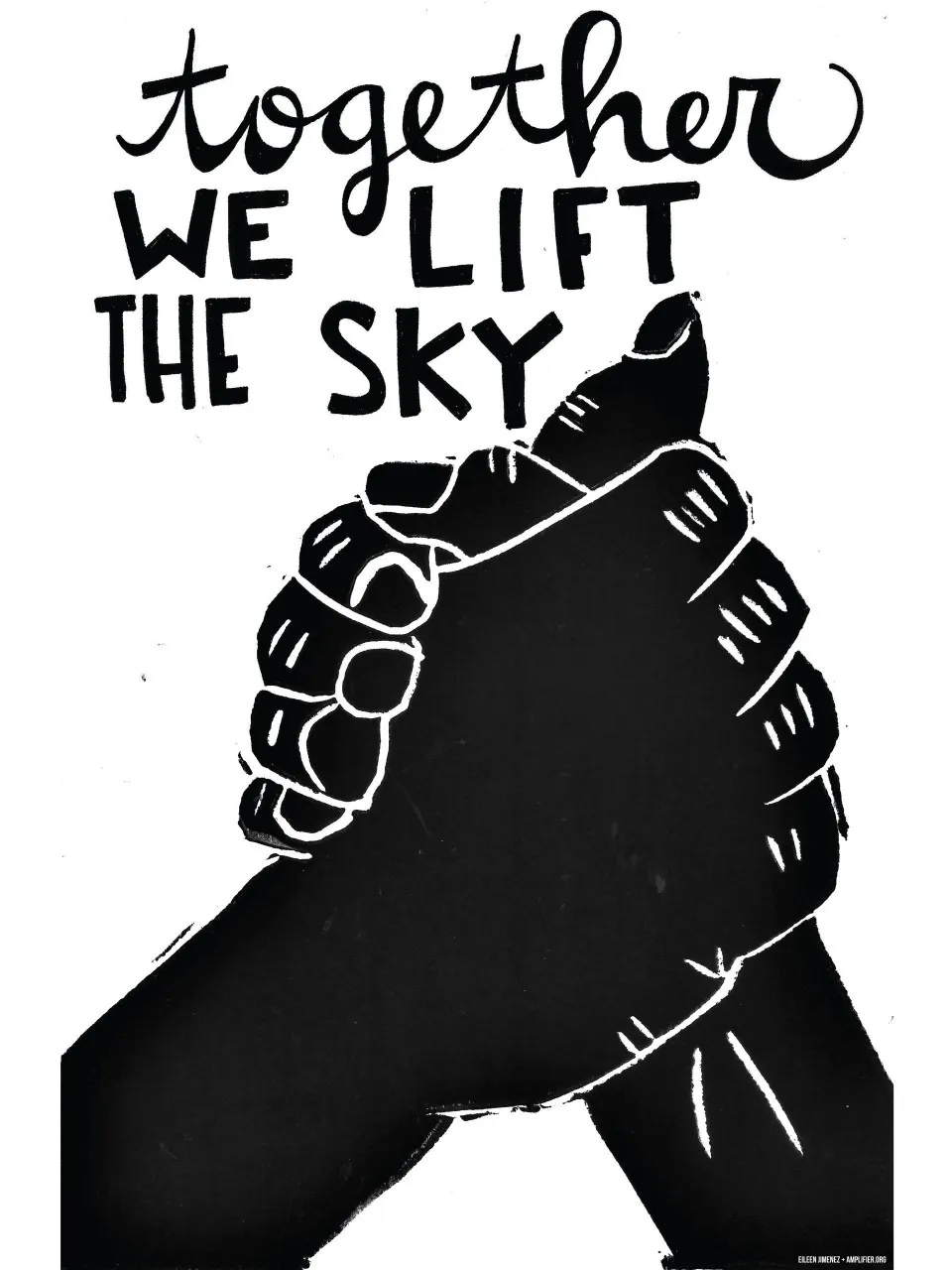
Introduction to Psychology run by professor Christopher Holland.
QUEER INDIGENITIES
Colonialism imposed a new gender system that created very different arrangements for colonized males and females than for white bourgeois colonizers.
~ Marría Lugones
We will explore the power of Queer Indigeneities to disrupt fictions around Indigenous peoples imposed by western hetero-patriarchy and Christian mythologies about Indigenous sexualities. We will trace a genealogy of theorists, activists, creative writers, performance artists, and filmmakers who employ Indigenous-centered approaches to understanding gay, lesbian, bisexual, transgender, queer, and Two-Spirit (GLBTQ2) lives and communities. This transdisciplinary course traverses disciplines ranging from literature to anthropology, and critiques the relationship between colonialism and heteropatriarchy. We will explore this scholarship for intersections with Peace and Justice studies.
The course will foreground contemporary queer Indigenous lived experience(s). One of the central guiding questions of the course is to interrogate how Indigenous conceptions of gender changed in relation to colonization.
In this course, we examine some of the ethical challenges presented by contemporary business and describe a particular form of business practice, central to our thinking about ethics and business, one that we can generally identify as accounting. In doing so, we will first look at several theorists concerned to describe the structure of business, including the relations between labor and capital. What relations do we have to capital? What relations do we have to each other through exchange? Why do these relations call for accounting? Next, we will turn our attention to a number of texts from the history of ethics in order to trace different ways of thinking about relations of the self to self and others. In addition, we will examine the ways in which these ethical views differ as ways of accounting for one’s self and one’s productive activities. Finally, we will turn to a number of case studies from the history of business in order to explore the importance of various forms of accounting. Why are such accountings necessary? To whom are we accountable and why?

In this course, we examine some of the ethical challenges presented by business and describe a particular form of business practice, central to our thinking about ethics and business, one that we can generally identify as accounting. In doing so, we will first look at several theorists concerned to describe the structure of business, including the relations between labor and capital. What relations do we have to capital? What relations do we have to each other through exchange? Why do these relations call for accounting? Next, we will turn our attention to a number of texts from the history of ethics in order to trace different ways of thinking about relations of the self to self and others. In addition, we will examine the ways in which these ethical views differ as ways of accounting for one’s self and one’s productive activities. Finally, we will turn to a number of case studies from the history of business in order to explore the importance of various forms of accounting. Why are such accountings necessary? To whom are we accountable and why?


Songwriting Workshop is a hands-on class in which we will develop tools to both analyze popular songs and create our own. Throughout the course of the class, we will learn about writing melodies, lyrics, chord progressions, and arrangements - all of this culminating in the writing of an original song and the production of a demo recording.


ENG 204F-1, Spectrality: Art, Culture and Environment
Course Description:
In this course we’ll explore the power and presence of the ghost in a variety of cultural forms. While the ghost has long been a useful concept or character in ancient storytelling genres such as myth, folklore, and the epic tale, we’ll begin with the classic ghost story made popular in the 19th and early 20th century in English and American literature, focusing on Fin de Siècle tales by M.R. James, Henry James and Edith Wharton and the spectral tension between established gothic tropes and the advent of modernity. Post WWII ghosts and haunted houses as represented in the mid 20th century ghost stories of Elizabeth Bowen and Shirley Jackson, and depicted in the 2001 film The Others, will expand our view of spectral unrest, framing the spectral encounter as inextricably linked with traumatic memory. Relatedly, we’ll look at “whiteness” as a specter haunting Helen Oyeyemi’s 21st century multicultural Britain in her novel White is for Witching, and at the “ghost generation” of migrant spirts haunting Mati Diop’s Afro-surrealist film Atlantics. Finally, we’ll familiarize ourselves with Spectrality as a critical theory, a lens through which we might view the uncanny world in which we are living. To that end, and in consideration of Mark Fisher’s post Freudian definition of the uncanny (The Weird and the Eerie), we’ll explore the neo Lovecraftian fiction of China Mieville and the future-as-specter in Daphne Du Maurier’s “Don’t Look Now.” Ending the term on a light note, we’ll examine ghostly landscapes altered by nuclear holocaust and anthropogenic climate change. This course will follow a discussion rather than a lecture format.


American Gothic is the darker side of American Romanticism. Although the Gothic is thoroughly romantically preoccupied with the self, the human mind and interior mental processes, its vision of us is altogether bleaker, hence the Gothic's usefully apt synonym 'dark romanticism.' The critic Leslie Fiedler once complained that American fiction in the 19th- century became 'bewilderingly and embarrassingly, a gothic fiction, non-realistic, sadist and melodramatic--a literature of darkness and the grotesque in a land of light and affirmation." Notably, while the Transcendentalists celebrated human perfection, the Dark Romantics explored sin, self-destruction, and the psychological effects of guilt and madness. While the Transcendentalists celebrated the natural world, for Dark Romantics nature was dark, sinister and often unknowable. While the Transcendentalists expressed Emersonian faith in the ideal and in a cosmic oversoul, American Gothic writers left the reader only with contradictions and paradoxes, with moral and emotional ambiguity. For the American Gothic writer, America's Puritan heritage was a lingering consciousness of the coexistence of good and evil, a prevailing sense of Calvinist guilt, and the remnants of apocalyptic terror. In many regards also, it might be argued that the apparently un-American elements of Gothic fiction actually have their origin in U.S. history, in particular with an unconscious of the "American dream" that was ever fearful of the undisciplined rule of majority, mob rule democracy and eruptions of social disorder. Notably, American Gothic in the 19th-century is also quite distinct from the British Gothic tradition. While both explore the uncanny, and the nature of fear and terror, American Gothic is more philosophical in nature, with an emphasis on mystery, symbol and allegory, and often with, as we shall now see, an uncanny exploration of questions of gender and sexuality.
This course introduces the foundations of International Relations – conceptual and theoretical and proceeds to explore several issues in different realms of international politics. It tries to incorporate the scope and breadth of the literature that has defined the study of international relations. It includes the evolution of international politics with an emphasis on the Cold War and the post-Cold War era. It identifies and assesses the theoretical paradigms – Realism, Liberalism, and Constructivism in the light of several substantive issues. Issues like war (conventional and non-conventional), human rights, international political economy, climate change, foreign policy, and globalization, among others, help capture the essence of international relations. Analyses of several case studies related to these issues also feature in this course.

An examination of the Ancient Mediterranean from prehistory to ~500 CE.
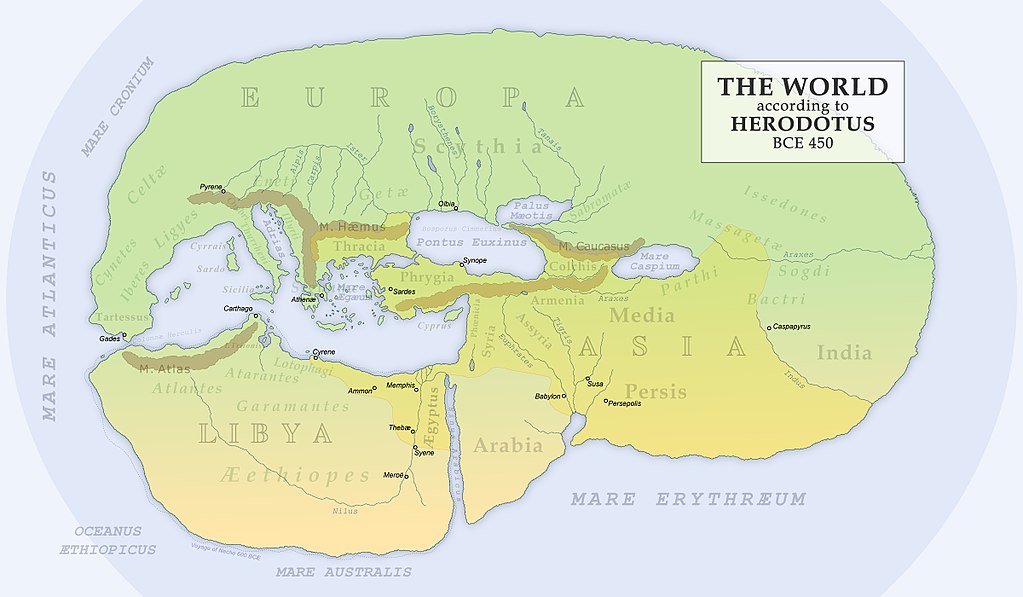
An examination of the ancient Mediterranean from prehistory to ~500CE.

In this introductory course, we will explore the range of literary expressiveness including fairy tale, poetry, the conventional novel, the visual or graphic novel and the short story, as well as the classification of literature into specific genres; overall, of course, our main interest will be in exploring the source material for making textual and visual literary art with a focus on narrative “DNA”, i.e., the primary materials and impulses that generate story telling. Additionally, we’ll look at the arrangement of elements such as plot, narration, character, setting, language, voice, tone, theme, etc., comprising literary forms. Finally, we’ll consider a variety critical strategies for reading and thinking about the literary arts, as well as the power and significance of our own interpretive role.

In this introductory course, we will explore the range of literary expressiveness including fairy tale, poetry, the conventional novel, the visual or graphic novel and the short story, as well as the classification of literature into specific genres; overall, of course, our main interest will be in exploring the source material for making textual and visual literary art with a focus on narrative “DNA”, i.e., the primary materials and impulses that generate story telling. Additionally, we’ll look at the arrangement of elements such as plot, narration, character, setting, language, voice, tone, theme, etc., comprising literary forms. Finally, we’ll consider a variety of critical strategies for reading and thinking about the literary arts, as well as the power and significance of our own interpretive role.
In this introductory course, we will explore the range of literary expressiveness including fairy tale, poetry, the conventional novel, the visual or graphic novel and the short story, as well as the classification of literature into specific genres; overall, of course, our main interest will be in exploring the source material for making textual and visual literary art with a focus on narrative “DNA”, i.e., the primary materials and impulses that generate story telling. Additionally, we’ll look at the arrangement of elements such as plot, narration, character, setting, language, voice, tone, theme, etc., comprising literary forms. Finally, we’ll consider a variety of critical strategies for reading and thinking about the literary arts, as well as the power and significance of our own interpretive role.
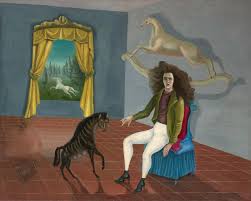
This course explores costume design as a powerful visual communication tool and cohesive component of a theatrical production. Through a series of projects we’ll follow a design process that combines visual storytelling elements, textual analysis, and multidisciplinary research. We’ll study the history of fashion, styles of visual presentation, textiles and materials, and you’ll illustrate your designs, culminating in a presentation of your work.
The general course description can be found in the syllabus, located here on moodle or in print from me.
This online supplement to the course is designed to give students the ability to submit work in one place, see after-hours (i.e. not during class) announcements regarding course work or scheduling, and engage in online discussion of course topics or material.
How is value created and sustained? What role does exchange play in value’s creation? In this course, we explore the relation between value and exchange in order to analyze contemporary, historical, and cross-cultural practices involving debt and money. We will read several theorists, including Georg Simmel, Karl Marx, Adam Smith, Marcel Mauss, Gayle Rubin, and David Graeber, on the relation between value and exchange. On this basis, we will then examine the ethical implications of money and debt relations. In so doing, we will analyze and contrast contemporary and market forms of exchange with historical and cross-cultural practices of exchange.
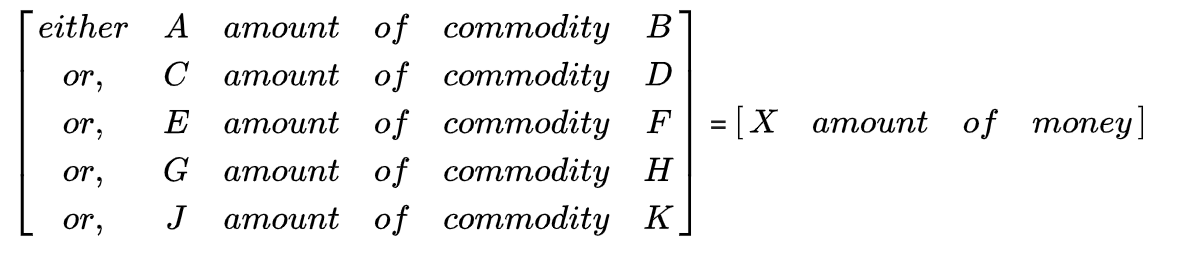
How is value created and sustained? What role does exchange play in value’s creation? In this course, we explore the relation between value and exchange in order to analyze contemporary, historical, and cross-cultural practices involving debt and money. We will read several theorists, including Georg Simmel, Karl Marx, Adam Smith, Marcel Mauss, Gayle Rubin, and David Graeber, on the relation between value and exchange. On this basis, we will then examine the ethical implications of money and debt relations. In so doing, we will analyze and contrast contemporary and market forms of exchange with historical and cross-cultural practices of exchange.
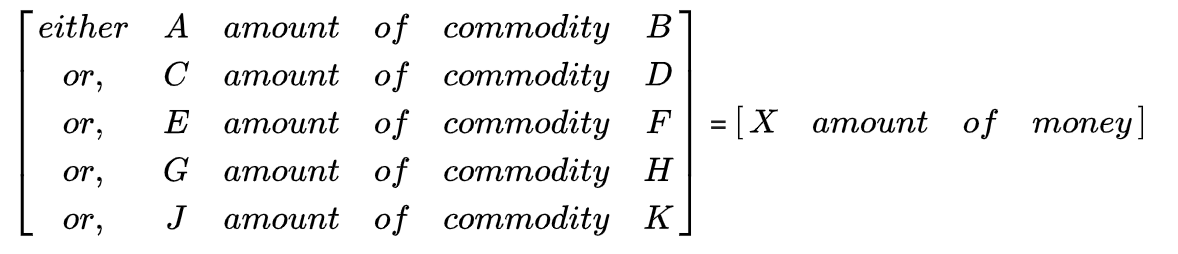
How is value created and sustained? What role does exchange play in value’s creation? In this course, we explore the relation between value and exchange in order to analyze contemporary, historical, and cross-cultural practices involving debt and money. We will read several theorists, including Georg Simmel, Karl Marx, Adam Smith, Marcel Mauss, Gayle Rubin, and David Graeber, on the relation between value and exchange. On this basis, we will then examine the ethical implications of money and debt relations. In so doing, we will analyze and contrast contemporary and market forms of exchange with historical and cross-cultural practices of exchange.
Course Synopsis
This team-taught course draws on the expertise of a variety of transnational activists, as well as Knox and outside faculty; and is overseen by one coordinating-integrating professor. Topics covered include a variety of methodological approaches to activism: from environmental justice activism to prison abolition to the role of the arts and humanities as agents for change. We explore the power and limits of Peace and Social Justice resistance (s). The course is one of two required courses for the Peace and Justice Minor.
Student Learning Goals: